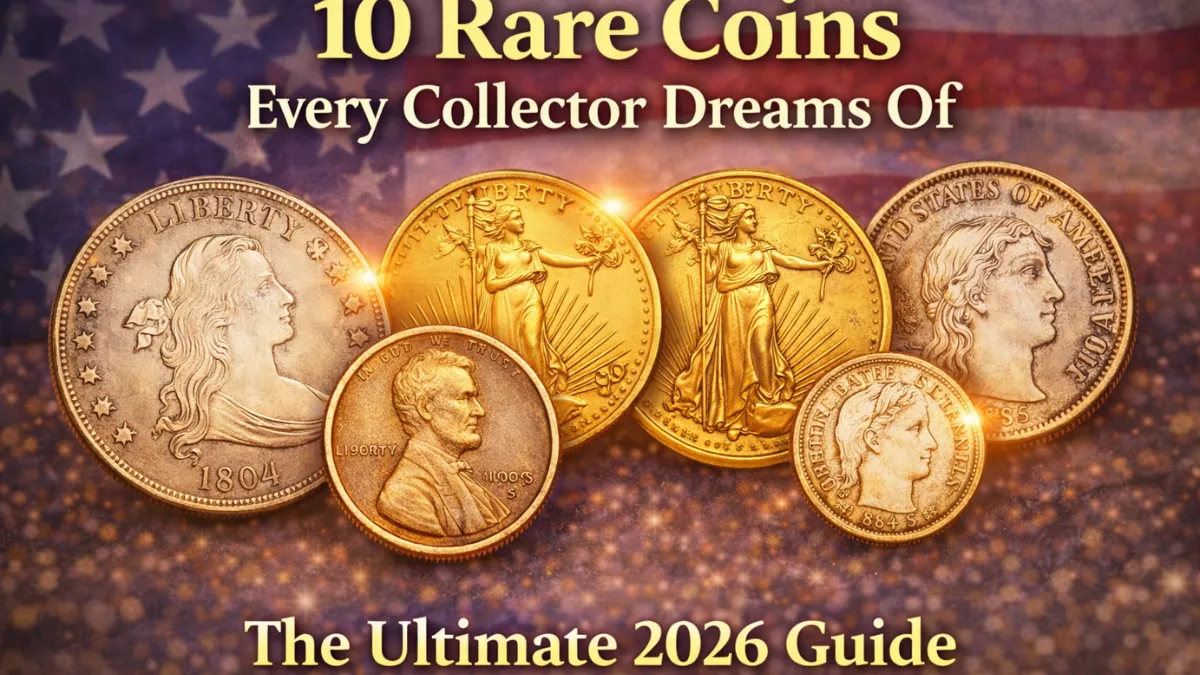
This 2026 guide highlights ten rare coins that collectors around the world admire and actively seek. Each coin listed here is known for its rarity, history, or unique story. The goal of this guide is to explain in clear and simple language how to recognize these coins, understand why they are valuable, and learn how to protect them properly.
Whether you are new to coin collecting or already experienced, knowing what makes a coin rare can help you make smarter decisions. Rare coins are not only historical objects but also financial assets that require research and careful handling. By understanding identification details, grading, provenance, and market demand, collectors can avoid common mistakes and focus on quality pieces that truly deserve attention in 2026.
Top 10 Rare Coins Every Collector Dreams Of
Below are ten famous rare coins from different time periods and countries. Each one is respected for its scarcity, history, and collector demand.
- The 1933 Saint-Gaudens Double Eagle from the United States is one of the most talked-about coins in history. Its limited legal ownership and dramatic legal background make it extremely valuable and desirable among serious collectors.
- The 1794 Flowing Hair Dollar is considered one of the first silver dollars issued by the young United States. Its age and importance in early American coinage make it highly prized.
- The 1804 Draped Bust Dollar is often called the “King of American Coins.” Although dated 1804, it was struck later for diplomatic gifts, which adds mystery and rarity.
- The 1913 Liberty Head Nickel is famous because only five examples are known. Each coin has its own documented ownership history.
- The 1787 Brasher Doubloon is an early American gold coin connected to colonial history and is valued for both rarity and gold content.
- The 1792 Birch Cent is a rare experimental coin from the earliest days of the U.S. Mint and attracts collectors who focus on patterns.
- The 1907 Saint-Gaudens Ultra High Relief Double Eagle is admired for its artistic design and bold high-relief striking.
- The 1822 6400 Reis is an important world coin tied to Brazil’s independence and is rare in higher grades.
- The Edward VIII Proof Sovereign is highly collectible because King Edward VIII abdicated before regular coins were widely issued.
- The 1870-S Seated Liberty Dollar is valued for its limited mintage and connection to special mint circumstances.
How to Identify and Verify Rare Coins
Correct identification is the first step in rare coin collecting. Collectors must carefully examine mint marks, design details, edge lettering, and die characteristics. Provenance, which means ownership history, can greatly affect value. Always compare your coin with trusted reference images and auction records. Third-party grading companies such as Professional Coin Grading Service and Numismatic Guaranty Company provide certification that confirms authenticity and condition. Verified grading reduces risk and increases buyer confidence. Without proper verification, even a rare-looking coin may not achieve strong market value.
Value Factors for Rare Coins
Several factors determine the market value of a rare coin. The table below summarizes the main drivers of price.
| Factor | Why It Matters |
|---|---|
| Rarity | Fewer known examples increase demand |
| Condition | Higher grades command higher prices |
| Provenance | Documented ownership adds trust and value |
| Demand | Market interest influences auction results |
| Historical Importance | Strong stories increase collector appeal |
Collectors should review recent auction sales instead of relying only on price guides. Real transaction data provides a clearer picture of true value.
How to Buy and Protect Rare Coins
Purchasing rare coins requires caution and preparation. Buyers should work with established dealers or respected auction houses. Always request grading certificates and full documentation before completing a transaction. Proper storage is equally important. Rare coins should be kept in secure locations such as bank safe deposit boxes or insured private vaults. Insurance coverage protects against theft or damage. Maintaining organized purchase records and provenance documents helps with future resale or estate planning. Careful handling and climate-controlled storage prevent surface damage and preserve long-term value.
Small Case Study: 1933 Saint-Gaudens Double Eagle Sale
A well-known sale of the 1933 Saint-Gaudens Double Eagle demonstrates how provenance and legal clarity can impact value. After years of legal review, one verified specimen was sold at a major auction for a record-setting amount. The final price reflected both its extreme rarity and the confirmed legal ownership status. This example shows that documentation and clear title can significantly increase buyer confidence. Collectors should always consider legal background when investing in high-value coins.
Practical Tips for New Collectors of Rare Coins
Beginners should start by focusing on one area instead of trying to collect everything at once. Studying specialized catalogs and reviewing auction archives builds knowledge and confidence. Joining coin clubs or online numismatic communities allows collectors to learn from experienced members. Attending coin shows and auctions provides hands-on experience with authentic pieces. Patience and research are more important than quick purchases.
Final Checklist Before Buying Rare Coins
Before finalizing any rare coin purchase, confirm third-party certification and verify grading details. Check ownership history and ensure there are no legal restrictions. Compare recent auction results for similar coins in the same grade. Arrange secure storage and insurance coverage before taking possession. Taking these careful steps reduces risk and improves long-term satisfaction.
Collecting rare coins in 2026 requires discipline, research, and careful verification. With proper knowledge and planning, collectors can build meaningful collections that combine history, artistry, and financial potential.
✨ You May Also Like ✨