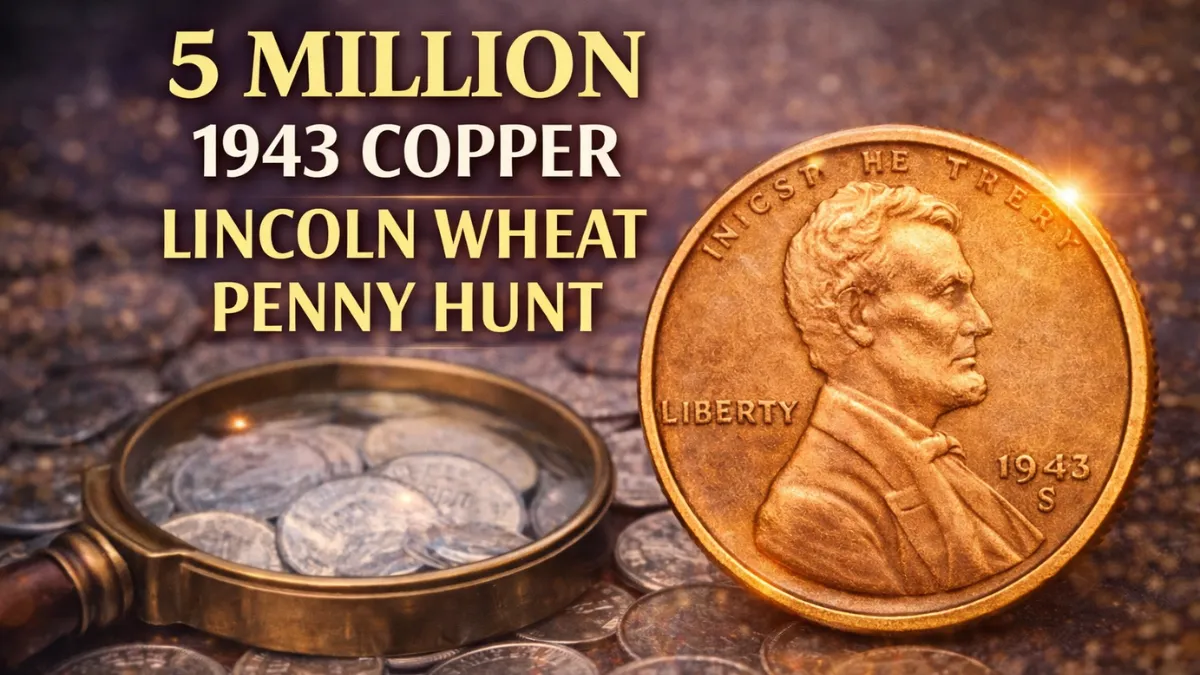
The 1943 copper Lincoln wheat penny is one of the most famous rare coins in American coin collecting. Most pennies made in 1943 were not copper because the United States needed copper for World War II supplies. However, a few copper pennies were accidentally struck that year, and those rare mistakes are now worth huge amounts of money. Some top-quality examples have sold for very high prices, and stories often mention values reaching into the millions.
Because of its rarity and historical importance, collectors, investors, and museums are always interested in authentic examples. If you ever find a 1943 penny that looks copper instead of silver-gray steel, it is important to check it carefully. A real one can completely change the value of a coin collection and must be handled with proper care and professional verification.
Why the 1943 Copper Lincoln Wheat Penny Is Important
The value of the 1943 copper penny comes from a major change in coin production during World War II. In 1943, the U.S. Mint stopped using copper for pennies and began making them from zinc-coated steel to save copper for military equipment.
Because of this switch, almost all 1943 pennies appear silver or gray. A copper penny from that year means a production mistake happened at the Mint. A few leftover copper blanks from 1942 were accidentally used to strike 1943 coins. These error coins were released into circulation without anyone noticing at the time. Today, they are seen as historic mistakes connected to wartime America. Their unusual origin and limited number make them highly valuable and very desirable among serious coin collectors.
History of the 1943 Copper Lincoln Wheat Penny
During World War II, the United States needed large amounts of copper for ammunition, wiring, and other military equipment. To support the war effort, the U.S. Mint decided to produce pennies from steel coated with zinc instead of copper. This change happened only for the year 1943. However, a small number of copper coin blanks from 1942 were still present in the coin presses. These blanks were accidentally struck with 1943 dies, creating copper pennies dated 1943.
Only a very limited number of these coins are known to exist today. Because they were not supposed to be made, collectors consider them mint errors. Their connection to wartime production changes adds historical importance to their already rare status.
Why Are 1943 Copper Pennies So Rare?
The rarity of the 1943 copper penny comes from two main reasons: production error and survival rate. First, only a few copper blanks were mistakenly used in 1943, so the total number produced was extremely small. Second, many coins from that period were lost, damaged, or melted over time. As a result, only a limited number of genuine examples are confirmed today.
Each known coin is carefully recorded and studied by experts. Because so few exist, demand is always higher than supply. This strong demand pushes prices up whenever one appears at auction. The combination of historical background, mint error status, and very low supply makes the 1943 copper Lincoln wheat penny one of the rarest and most valuable pennies ever made.
How to Identify a 1943 Copper Lincoln Wheat Penny
If you believe you have found a 1943 copper penny, follow simple steps to check it carefully before getting too excited. Start by confirming the date reads 1943 and that it shows Abraham Lincoln on the front and wheat ears on the back. Next, look at the color. A real copper coin will appear brown or reddish, while steel pennies look silver or gray. Perform a magnet test. Steel pennies will stick to a magnet, but copper ones will not. Weigh the coin using a precise digital scale. A genuine copper penny weighs about 3.11 grams, while a steel penny weighs about 2.7 grams. Carefully inspect the surface for signs of plating or tampering, as many fake coins are altered steel pennies.
Quick Comparison Table
| Feature | 1943 Copper Penny | 1943 Steel Penny |
|---|---|---|
| Color | Brown or reddish | Silver or gray |
| Magnet Reaction | Not magnetic | Magnetic |
| Weight | About 3.11 grams | About 2.7 grams |
| Rarity | Extremely rare | Very common |
This table helps collectors quickly compare key features before seeking professional authentication.
Verifying and Protecting Your Coin
Home tests are helpful but not final proof. Many fake coins are created by plating steel pennies with copper or changing the date on a 1948 penny to look like 1943. Because of this, professional authentication is very important. If your coin passes basic tests, take clear photos from different angles and keep records of how you found it.
Contact a trusted coin grading company such as PCGS, NGC, or ANACS for official testing and certification. Once authenticated, the coin will be sealed in a protective holder. This process increases buyer trust and makes selling easier. Always ship valuable coins with insurance and avoid accepting quick offers from unknown buyers before verification.
Value and Selling Considerations
The value of a real 1943 copper penny depends on its condition and history. High-grade examples with strong detail and original surfaces can sell for very high prices at major auctions. While some headlines mention values up to five million dollars, actual selling prices vary.
Most confirmed examples sell for lower amounts, but still reach impressive figures. If you plan to sell, consider using a well-known auction house that specializes in rare U.S. coins. Competitive bidding can increase the final price. Remember to calculate grading fees, auction commissions, and insurance costs when estimating your final profit. Never rush into a sale without getting more than one professional opinion.
Common Scams and Mistakes to Avoid
Many collectors fall victim to fake 1943 copper pennies. Some scammers coat steel pennies with copper to trick buyers. Others alter the number 8 in a 1948 penny to look like a 3. These fake coins can appear convincing at first glance. Be cautious of buyers offering fast cash deals without authentication. Serious collectors understand the need for grading and verification.
Always rely on certified experts before making financial decisions. Independent appraisals and professional grading reports protect you from losing money or selling a rare coin for less than its true value. Careful steps and patience are key when handling a potentially valuable coin.
Final Conclusion
The 1943 copper Lincoln wheat penny remains one of the most exciting discoveries in American coin collecting. Its story connects directly to World War II and the U.S. Mint’s decision to change penny materials for the war effort. Because only a few were accidentally made, these coins are extremely rare and highly valuable. If you believe you have found one, follow simple identification steps, but always seek professional authentication before selling.
Avoid scams, document everything carefully, and work with trusted grading services or auction houses. A genuine 1943 copper penny can be life-changing, but only if handled correctly. With patience, knowledge, and proper verification, collectors can safely explore the thrilling hunt for this historic and valuable coin.
✨ You May Also Like ✨