The Jefferson Nickel from 1964 holds a special place in U.S. coin history. It was made during a period of economic change, when the demand for everyday coins was rising quickly. In the early 1960s, population growth and expanding business activity caused the need for more circulating money, and nickels were among the most commonly used coins.
To meet this demand, the Mint produced 1964 nickels in extremely large numbers. While most were ordinary, the massive production led to small differences and variations that collectors now find important. Today, these nickels are seen as more than spare change—they represent an important moment in American monetary history.
Why 1964 Was an Important Year for U.S. Coins
The year 1964 marked a major shift in U.S. coinage. Rising silver prices forced the government to remove silver from most circulating coins, putting pressure on the Mint to increase production quickly. Even though nickels did not contain silver, they were affected by the intense production environment.
Billions of 1964 nickels were struck, and the rush to supply coins resulted in uneven quality. These conditions allowed rare varieties to appear, making the 1964 nickel especially interesting to collectors and researchers.
Design and Features of the Jefferson Nickel
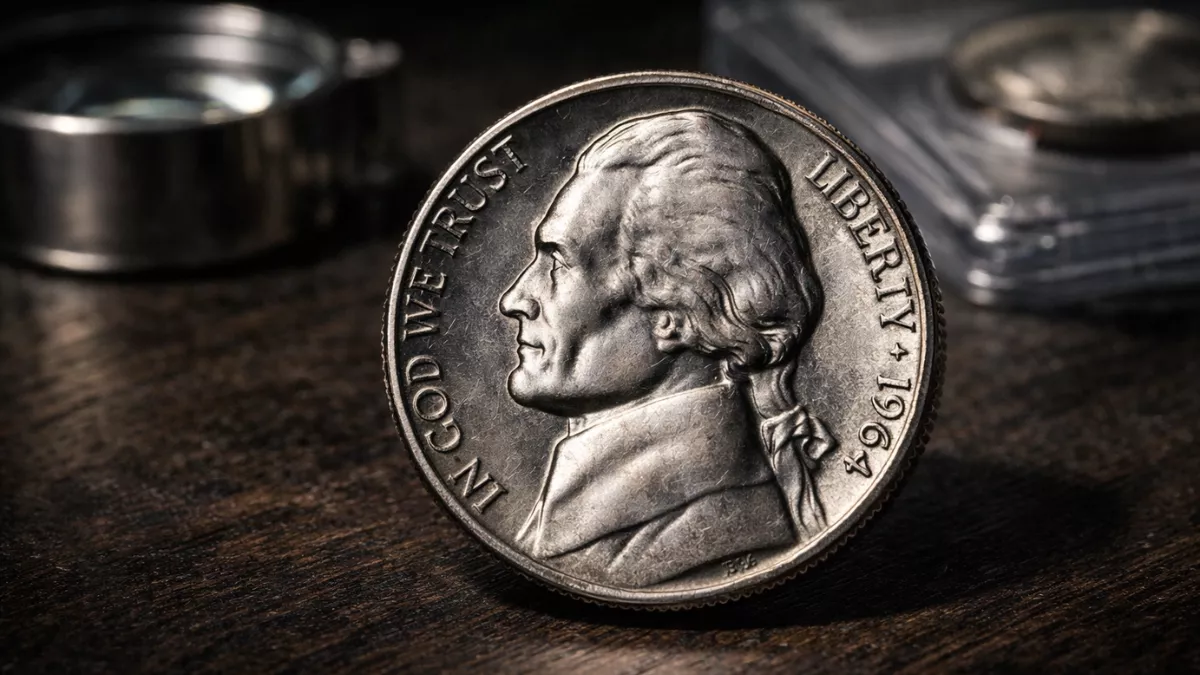
The 1964 nickel kept the same design first introduced in 1938. The front shows a portrait of Thomas Jefferson, while the back displays his famous home, Monticello. Even though the design was familiar, collectors notice small differences in how sharply the coin was struck.
Strong detail in Jefferson’s hair and clearly defined steps on Monticello suggest a higher-quality strike. Coins with clean, sharp features are far more valuable than those with weak or blurry details.
Rare Varieties That Increase Value
One key reason to save a 1964 nickel is the possibility that it may be a rare variety. Some coins show doubled die errors on the front or back, caused by slight misalignment during minting. Another highly desired feature is the “full steps” designation, which refers to the clear and complete steps visible on Monticello.
Nickels with full steps are much harder to find and often sell for much higher prices. These varieties turn a common coin into a valuable collectible, making close inspection essential.
Collector Demand for 1964 Nickels
The market for 1964 nickels remains active and competitive. Although billions were made, very few survive in top condition. Most circulated coins are still worth face value, but uncirculated examples with sharp detail can be worth far more.
Auction records show that rare varieties—especially full steps nickels—can sell for hundreds or even thousands of dollars. This strong demand shows why spending a 1964 nickel without checking it first can be a costly mistake.
Condition and Grading Importance
The condition of a 1964 nickel plays a major role in its value. Professional grading services examine coins for strike quality, surface condition, and shine. Grades range from worn circulated coins to mint state examples that show no signs of use. A high-grade 1964 nickel with full steps can be a standout piece in any collection. Careful handling is essential, as even small scratches can significantly lower a coin’s worth.
Why You Should Not Spend This Nickel
Many people spend 1964 nickels without realizing their potential value. While it may look ordinary, it could be a rare variety or a high-grade coin worth far more than five cents. Once spent, the chance to identify and preserve that value is gone. For collectors and everyday holders alike, setting these coins aside for evaluation is a smart decision rather than letting them disappear in daily purchases.
Investment Value of the 1964 Nickel
Beyond collecting, the 1964 nickel also offers investment potential. Rare coins have a long history of increasing in value, and interest in full steps and error nickels continues to rise. As more collectors enter the hobby, competition for quality examples grows stronger. Because of its historical importance and scarcity in top condition, the 1964 nickel can be a valuable long-term holding.
How to Identify Valuable Examples
Finding a valuable 1964 nickel requires careful inspection. Good lighting helps reveal details on Jefferson’s portrait and Monticello’s steps. Doubling in letters or design elements may signal a rare error. Full, uninterrupted steps on Monticello are especially important. A magnifying glass can uncover features not easily seen. If unsure, professional grading is the best way to confirm authenticity and value.
Educational Value for Collectors
The 1964 nickel is an excellent learning tool for beginners. Its wide availability makes it easy to find, while its rare varieties offer chances to study minting errors and grading standards. For experienced collectors, it serves as a reminder that common coins can still hide valuable surprises. Its role in coin education ensures continued interest for years to come.
Conclusion: Protecting the 1964 Nickel’s Legacy
The 1964 Jefferson Nickel is more than a simple five-cent coin. It represents history, potential investment value, and collectible appeal. Its massive production combined with rare varieties makes it especially intriguing. Spending this coin without checking it first could mean losing a hidden treasure. By preserving and studying the 1964 nickel, collectors help keep its story alive. Whether you are new to coin collecting or highly experienced, this nickel deserves careful attention—and a place in your collection rather than your pocket change.
✨ You May Also Like ✨