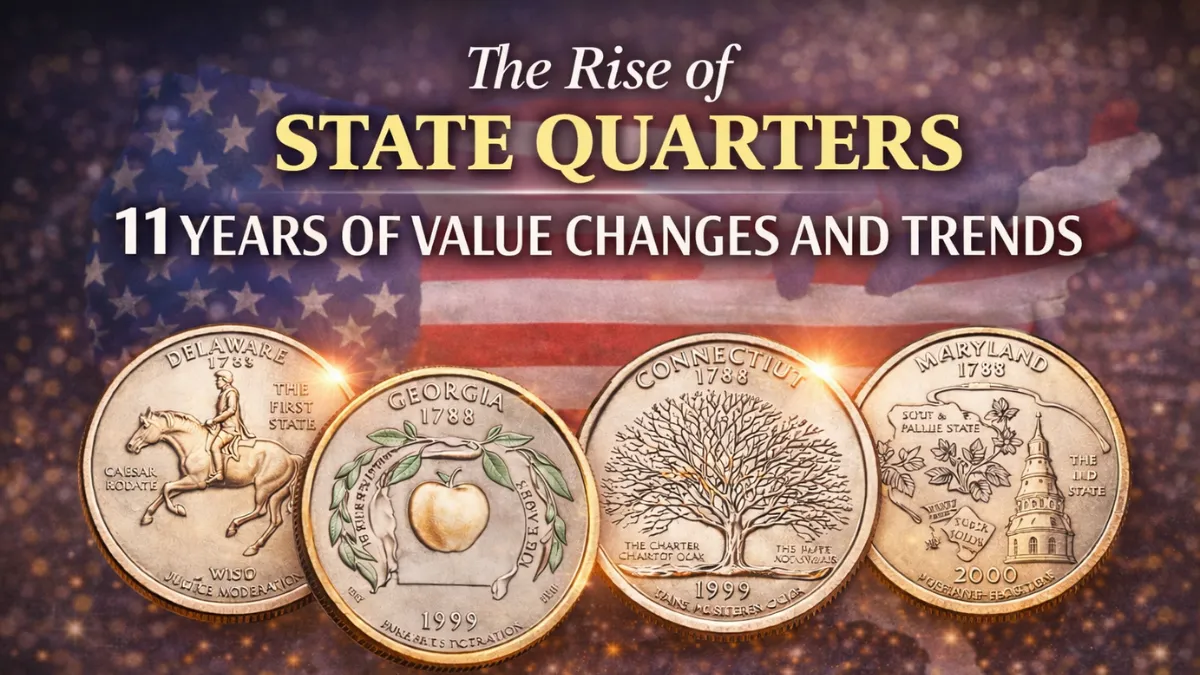
The United States Mint launched the State Quarters program from 1999 to 2008, changing modern coin collecting in a big way. Over eleven years, collectors and dealers saw prices move up and down as supply, demand, and overall market conditions shifted.
At first, excitement pushed prices higher for certain coins. Later, as more coins entered circulation and collections were completed, many values settled. Even so, special pieces such as high-grade examples and verified error coins continued to attract attention. This long-running program proved that even everyday circulating coins can create lasting interest. By studying how prices changed during these eleven years, collectors can better understand what affects value and how to make smarter buying or selling decisions in today’s coin market.
Why State Quarters Became Popular
State Quarters quickly became popular because they were different from earlier coins. While the front design stayed mostly the same, each state received its own unique reverse design. This encouraged families, schools, and casual collectors to gather all fifty states. The coins were affordable since they had a low face value, and they were easy to find in everyday change.
Strong advertising and national attention also helped increase interest. Because of this high demand, some newly released coins sold above face value in coin shops and online marketplaces. Many people who had never collected coins before started building sets, which added energy to the hobby. The mix of education, affordability, and creativity made the program one of the most successful coin series ever released by the United States Mint.
Tracking 11 Years of Value Changes for State Quarters
Over the eleven-year period, the market followed three main stages. First came the excitement phase, when new releases created strong demand and short-term price increases. Next came a correction phase, when supply caught up with demand and prices adjusted downward.
Finally, the market moved into a steady phase where only certain coins held extra value. Understanding these stages helps collectors avoid unrealistic expectations. Many common circulation coins eventually returned to face value, while rare errors and high-grade coins maintained stronger prices. Watching how these changes unfolded over time shows that patience and knowledge are important in coin collecting. It also reminds buyers that not every new coin will automatically increase in value.
Phase 1: Hype and Premiums
When the first State Quarters were released, collectors rushed to buy rolls, mint sets, and proof versions. Early sales often included small premiums above face value because people wanted complete sets as soon as possible. Special editions, especially silver proof sets, were marketed as collectible items, which helped raise prices further. Online auctions sometimes showed price spikes for unopened rolls in uncirculated condition. During this period, excitement played a big role in pricing.
However, many of these early premiums were temporary. As more coins became available, prices slowly began to stabilize. This phase teaches collectors to be careful about paying high prices during the first wave of excitement.
Phase 2: Market Correction
As millions of coins entered circulation, supply increased quickly. Many collectors finished their sets, and demand slowed. Because of this, most regular circulation strikes returned to values close to twenty-five cents. Dealers adjusted their prices to reflect the large supply.
However, not every coin lost value. Error coins, low-mintage issues, and pieces in very high grades continued to sell at better prices. The correction phase showed that rarity and condition matter more than simple popularity. Coins graded in higher mint state levels often held steady value, while average circulated coins became common again. This period helped the market reach more realistic and stable pricing.
Phase 3: Long-Term Niche Interest
After the correction phase, the market settled into a steady pattern. A smaller but dedicated group of collectors continued focusing on high-quality coins and unusual varieties. Interest remained strongest for coins with certified high grades or confirmed mint errors.
Some state designs also stayed popular because of their artistic appeal. Over time, certain lower-mintage coins showed modest appreciation compared with more common issues. While most circulated quarters stayed near face value, specialty pieces developed a stable niche market. This phase highlights the importance of quality and verified rarity over mass availability.
What Drives State Quarter Values
Several important factors determine how much a State Quarter is worth. Collectors should review these points carefully before making purchases.
| Factor | Why It Matters |
|---|---|
| Mintage | Lower production numbers often mean higher value |
| Condition | Higher grades bring stronger premiums |
| Errors | Verified mint mistakes attract collectors |
| Type | Proof and silver versions usually sell for more |
| Demand | Popular designs can increase interest |
Understanding these elements helps buyers avoid common mistakes and focus on coins with stronger long-term potential.
How to Track and Evaluate Market Trends
Collectors should rely on completed sales data instead of asking prices. Auction records show what buyers actually paid, which gives a more accurate market picture. It is also important to compare coins by grade because small differences in condition can change value significantly. Following reputable dealers, coin forums, and hobby publications helps identify rising trends. Economic conditions can also influence hobby spending, which affects prices. Keeping organized records of purchases and monitoring updates over time can improve decision-making. Good research reduces risk and builds confidence.
Real-World Example: A Small Case Study
In the early 2000s, one state release gained regional attention and sold for modest premiums in uncirculated rolls. A few years later, those same rolls dropped close to face value due to increased availability. However, certified high-grade examples and verified doubled-die errors continued selling for multiples of standard coins. A collector who focused on rare varieties instead of common rolls achieved better long-term returns. This example shows the value of careful selection and patience rather than chasing short-term trends.
Practical Tips for Collectors and Investors
Collectors should decide early whether they are building complete sets, focusing on errors, or investing in high-grade examples. Buying the best condition within budget usually provides stronger resale potential. Proper storage in protective holders prevents damage and preserves grade. Documentation and third-party certification improve credibility during resale. Avoid rushing into purchases during hype periods, and always compare prices from multiple sources. A disciplined strategy supports both enjoyment and potential profit.
Examples of Common Pitfalls
New collectors sometimes overpay for circulated coins or assume every unusual mark is valuable. Some mistakes happen when buyers skip certification or fail to research past sales. To reduce risk, verify grading standards and consult trusted sources. Buying from reputable dealers with return policies also adds protection. Careful research prevents disappointment and financial loss.
Conclusion: Long-Term View on State Quarters
Over eleven years, the State Quarters market demonstrated how excitement can create early price increases, but long-term value depends on rarity and condition. Most common coins returned to face value, while certified high-grade and verified error coins maintained stronger interest. Collectors who research trends, track data, and focus on quality are more likely to preserve or increase value. State Quarters remain both a popular hobby and an educational collecting experience that rewards patience and informed decisions.
✨ You May Also Like ✨