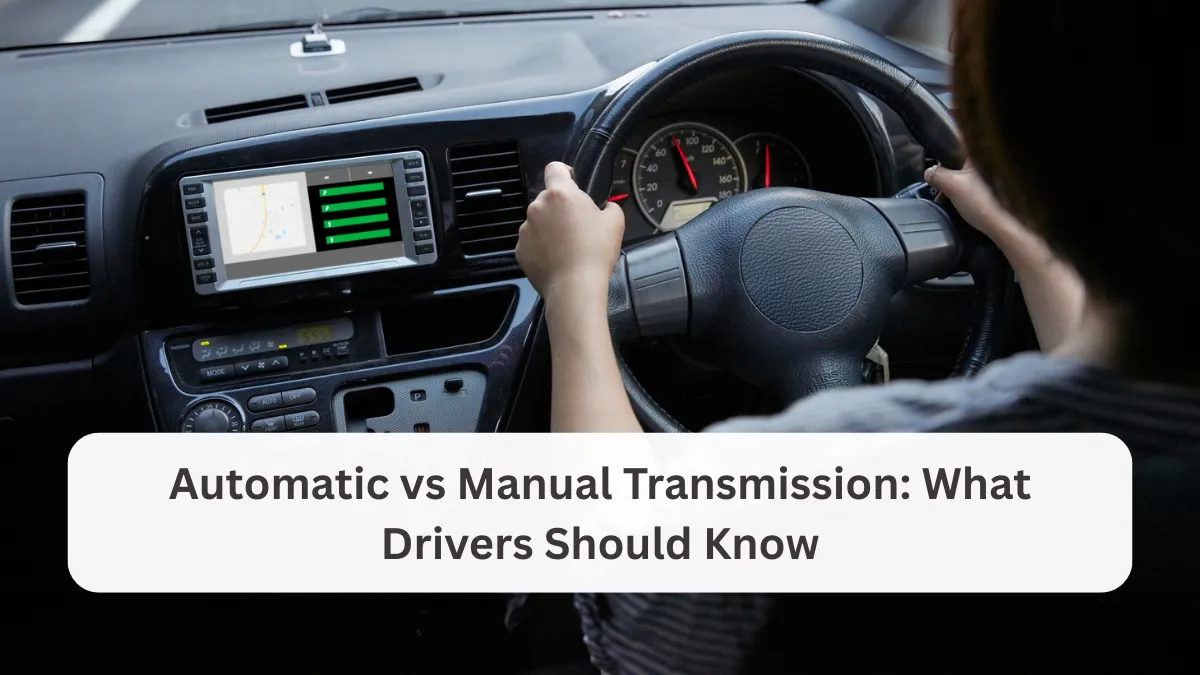
Choosing between an automatic or manual transmission can leave new drivers scratching their heads, especially when you’re shopping for your first car or upgrading your daily driver. You’ve probably felt that confusion at the dealership, staring at specs and wondering which one fits your life in the city, on the highway, or during family road trips. This uncertainty often leads to buyer’s remorse or picking the wrong setup for your routine—like ending up with a manual in endless traffic or an automatic that feels sluggish on open roads.
The root of the problem boils down to not understanding how each transmission works in real-world driving. Without clear info, you might end up with a car that’s a hassle in traffic or guzzles more gas than expected. Many folks I know have shared stories of regretting their choice after the first month.
In this guide, I’ll break it down simply, drawing from my own miles behind the wheel—from LA freeways to rural backroads. We’ll cover why these differences matter and how to decide step by step, with practical examples from across the US.
Why the Confusion Around Automatic and Manual Transmissions Persists
Transmissions handle the power from your engine to the wheels, but automatics and manuals do this in totally different ways. An automatic shifts gears on its own using a computer, torque converter, and fluid couplings, sensing your speed and throttle to pick the right gear smoothly. A manual, on the other hand, puts you in full control with a clutch pedal and stick shift—you decide when to shift.
This core difference creates mismatches for drivers. For instance, if you’re a beginner navigating Chicago rush hour, clutching a manual might feel overwhelming, leading to stalls or jerky stops. Meanwhile, a senior on a fixed income might worry about an automatic’s fuel thirst on long drives to Florida, based on old stereotypes.
Everyday Driving Realities in the US
American roads amplify these issues. Stop-and-go traffic in places like Atlanta or Seattle favors automatics for ease—no constant pedal dancing means less fatigue after a long day. But manuals shine on twisty mountain passes in Colorado or the Smoky Mountains, where precise downshifting helps control speed without riding the brakes.
Fuel costs add pressure too. With gas hovering around $3.50 a gallon in most states, manuals often sip less, but only if you drive right—shift too late, and that advantage vanishes. I’ve seen friends in Texas save $200 a year with smart manual shifting on their commutes.
Weather plays a role as well. Snowy winters in Michigan make manuals trickier without practice, while dry California highways let them thrive.
Common Misconceptions Fueling the Problem
Many think manuals are “for enthusiasts only” or automatics are always pricier to fix. These myths come from 90s-era cars when automatics overheated easily. Modern automatics, like those in a Toyota Camry or Honda Accord, rival manuals in efficiency thanks to 8-10 speed gearboxes and advanced computers.
Others believe all manuals are stick shifts with H-patterns, ignoring sequential manuals in sports cars. Or they assume automatics can’t be fun—paddle shifters on a Dodge Charger prove otherwise.
Yet, without testing both, you overlook personal fit. A working professional commuting 50 miles daily in Dallas might love an automatic’s relaxation, letting them sip coffee hands-free. A student road-tripping cross-country from New York to LA prefers manual control for that engaging drive.
The Impact of Vehicle Type and Lifestyle
Pickup trucks like the Ford F-150? Almost always automatic for towing trailers across the Midwest. Sedans for urban families? Manuals are rare now, under 5% of new sales. Your job matters too—delivery drivers in Miami stick to autos for quick stops; off-roaders in Arizona grab manuals for low-range control.
Ignoring these leads to frustration. One buddy bought a manual Subaru for Seattle rain and hated slipping on wet hills.
Step-by-Step Guide to Choosing Automatic vs Manual
Let’s solve this with a straightforward process. Follow these steps to match a transmission to your life, using real US scenarios. Take your time—rushing costs more later.
Step 1: Assess Your Daily Driving Routine in Detail
Start by mapping your typical drives for a week. Use a notebook or app like GasBuddy to log routes, traffic, and terrain. Do you face heavy traffic, like I-95 in Miami? Automatics excel here—no clutch work means less fatigue and fewer near-misses.
List your weekly miles: short errands around Phoenix suburbs (favor auto ease) or long hauls on I-70 to Denver? For a parent shuttling kids, an automatic’s smooth shifts prevent jerky starts that upset passengers.
Break it down further: Percentage city (40%), highway (50%), hills (10%)? On highways, manuals give precise control for passing trucks. Note parking too—parallel spots in San Francisco suit autos with no-roll features.
Include weather patterns: Minnesota blizzards push toward autos with traction control.
Step 2: Test Drive Both Types Side by Side Thoroughly
Head to a dealership or used lot with options like a Honda Civic (manual available) and its automatic twin, or Mazda3 models. Drive the same 20-mile route: city streets, highway merge, stops, and a hill if possible.
In the manual, feel the clutch bite point—does slipping gears frustrate you during 10-stop traffic? Automatics let you focus on mirrors, signals, and pedestrians.
Spend 30 minutes each. Note physical comfort: Does your left leg ache after manual clutching? My first manual in college Pittsburgh hills was fun but tiring; switching to automatic for work commutes in flat Ohio saved energy.
Try acceleration: Manuals launch quicker with rev-matching; autos feel lazier but consistent.
Step 3: Compare Fuel Economy and Costs Realistically
Pull EPA ratings from fueleconomy.gov for your shortlist. A 2024 Ford Escape manual might edge out automatic by 2-3 mpg in mixed driving, saving $100-200 yearly at $3.50/gallon for 12k miles.
Dig deeper: City mpg favors autos now (CVT tech), highways lean manual. Real-world? TrackMyCar app users report manuals +2 mpg with discipline.
Maintenance breakdown: Manuals have clutches (replace every 100k miles, $800-1500 DIY possible), synchros ($500 at 80k). Autos need fluid/filter changes ($150-300 every 60k), rare rebuilds ($2500-4000 post-150k).
Insurance? Manuals can cost 10% less for under-25s in states like Florida, as they’re “harder to steal.” Shop quotes from Geico or Progressive.
Step 4: Evaluate Long-Term Ownership Factors
Resale is key. Automatics dominate US used markets—90% of cars on Cars.com—so they hold 5-10% more value in Texas or California after 3 years.
Reliability data from Consumer Reports: Both hit 200k+ miles. Manuals avoid complex auto failures but wear clutches faster in traffic. Post-2015 autos with sealed units last longer.
Winter specifics: In Buffalo, NY, autos pair with AWD seamlessly; manuals demand double-clutching on ice—practice in lots.
Towing? Autos’ torque converters handle 5k lbs effortlessly in an F-150; manuals limit to 3k without strain.
Step 5: Consider Your Skill Level, Preferences, and Future Needs
Beginners, seniors, or those with arthritis: Automatic for zero learning curve—one foot, no thinking. Seasoned drivers like mechanics pick manuals for the “connected” feel and cheaper parts.
Budget test: Manuals start $1k cheaper new (Civic MT vs AT). Used market? Stick-shift Jeep Wrangler holds value for Moab, Utah trails.
Family growth? Autos scale better for car seats. Hobby shift? Manuals for track days at Laguna Seca.
Finalize by scoring: Ease (auto 10/10), fun (manual 10/10), savings (manual 8/10). Pick your top priority.
How Automatic Transmissions Work and When They Shine
Automatics use a torque converter (fluid spins engine from transmission), planetary gears, and solenoids. Sensors read throttle, speed, load—shifts happen in milliseconds.
Best Scenarios for Automatics, with US Examples
Urban grind: LA’s 405 gridlock—no stalling, just brake and go. Families in suburban Atlanta love smooth rides from soccer practice to dinner.
Highway cruising: 10-speed units in Ram 1500 optimize rpm for 25 mpg towing campers cross-country.
Accessibility: Single-pedal for seniors in Florida retirement communities; no left-leg strain.
Towing/hauling: Contractors in Nashville use tow mode to lock gears, preventing hunt-and-peck shifts.
Potential Drawbacks and Practical Fixes
“Disconnected” feel? Opt for paddle-shift models like Jeep Grand Cherokee—mimic manual control.
Overheating in summer traffic? Install aux cooler ($200) for Vegas hauls.
CVT “rubber band” drone? Avoid base models; pick traditional autos in Hyundai Tucson.
How Manual Transmissions Work and When They Excel
Press clutch (disengages engine), select gear via shifter (gates for 1-2-3-4-5-6-R), release smoothly. Rev-match downshifts for seamless power.
Best Scenarios for Manuals, with US Examples
Enthusiast drives: Blue Ridge Parkway twists—downshift to 3rd for corners, brakes last longer.
Efficiency: VW Jetta manual owners in Portland log 35 mpg highway, shifting at 2500 rpm.
Affordable fun: Miata clubs in autocross events nationwide keep costs under $20k used.
Off-road: Toyota Tacoma manuals crawl Moab rocks with low gears.
Potential Drawbacks and Practical Fixes
Traffic fatigue: Practice rev-matching in parking lots; use hill-hold on newer cars like Hyundai Veloster.
Learning curve: $50-100 lessons at AAA schools in 40 states; start on automatics first.
Clutch slip: Avoid riding pedal; inspect at 50k miles.
Helpful Tips and Common Mistakes to Avoid
Maximize your choice with these battle-tested pointers from years on the road.
- Tip: Track a week’s drives first. Apps like Fuelly reveal 80% city? Go auto.
- Mistake: Ignoring clutch wear in manuals. Rest foot off pedal—saves $1k replacements. Feel slip? Service ASAP.
- Tip: Budget maintenance yearly. Autos: $200 fluid; manuals: $100 clutch fluid, $300 inspection.
- Mistake: Skipping winter tests. Manuals on black ice? Practice; add snow tires.
- Tip: Explore hybrids. Prius-like autos blend smoothness with 50 mpg regen “manual” modes.
- Tip: Check state emissions. Manuals pass easier in California with cleaner shifts.
- Mistake: Overlooking used history. Carfax for clutch jobs; test drive loaded.
Avoid sales pressure—walk away, research forums like Reddit’s r/whatcarshouldIbuy.
Case Study: Real Drivers’ Choices
Sarah, Chicago teacher: Switched manual to auto Civic—cut commute stress 50%.
Mike, Colorado hiker: Manual 4Runner for mountains—saved $400 gas yearly.
FAQ
Is an automatic transmission better for city driving in the US?
Yes, for 90% of drivers. No clutch in Boston or Philly traffic reduces stalls and fatigue. Skilled folks manage manuals, but practice first.
Do manual cars save money on gas and repairs long-term?
Typically 1-5 mpg and $500-2k cheaper fixes. TrackYourMiles users confirm, but poor shifting erases gains.
Can seniors or beginners handle a manual transmission safely?
With lessons, yes—but autos are ideal starters. Coordination fades; single-pedal wins for safety.
What’s the resale difference between automatic and manual cars?
Autos fetch 5-15% more/faster sales nationwide. Manuals niche-strong in sports (Miata +20%).
✨ You May Also Like ✨