
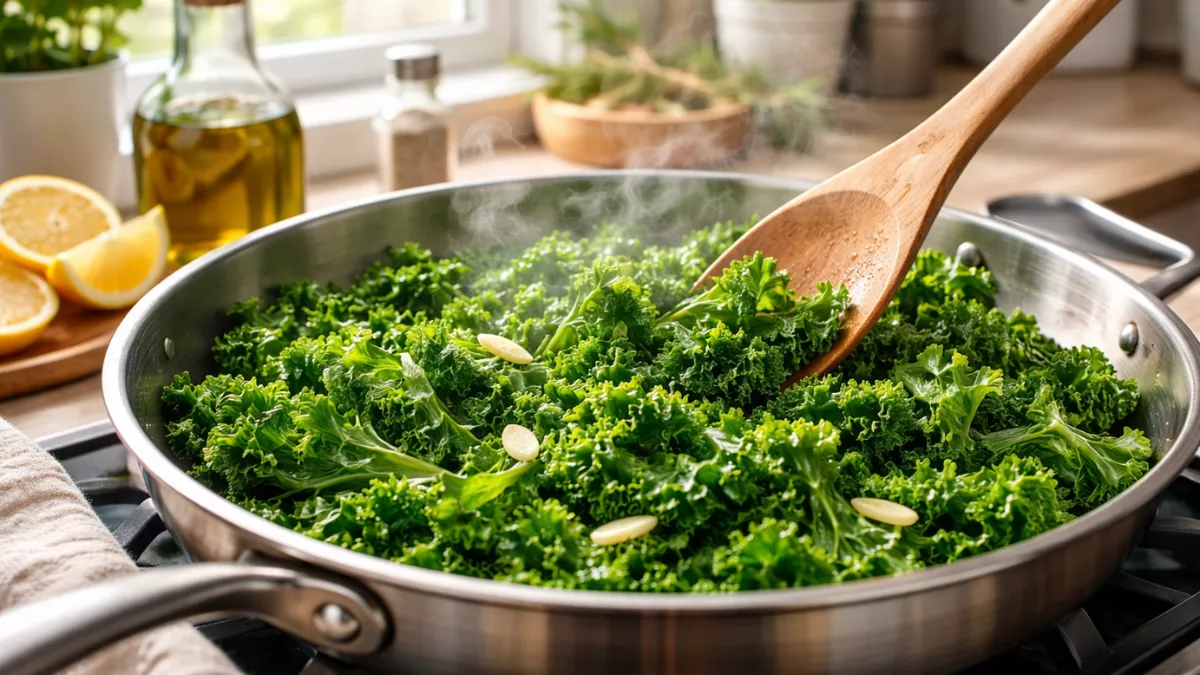
The best way to cook kale without losing nutrients is light sautéing with a small amount of healthy oil for 2–4 minutes. This method preserves vitamins, improves absorption of fat-soluble nutrients, and keeps kale easy to digest.
Kale has earned its reputation as one of the most nutrient-dense leafy greens on the planet. Packed with vitamins, minerals, antioxidants, and fiber, it’s a favorite among health-conscious eaters. But here’s the catch: how you cook kale can dramatically affect how many nutrients you actually get.

If you’ve ever wondered whether boiling kale ruins its benefits, or which cooking method keeps it healthiest, you’re not alone. In this guide, we’ll break down the best way to cook kale without losing nutrients, explain what to avoid, and share easy, delicious cooking methods that preserve both nutrition and flavor.
Why Kale Is So Nutritious
Before diving into cooking methods, it helps to understand what makes kale special.
Kale is rich in:
- Vitamin C – supports immunity and skin health
- Vitamin K – essential for blood clotting and bone health
- Vitamin A (beta-carotene) – promotes eye and skin health
- Folate – important for cell growth
- Calcium and magnesium – support strong bones
- Antioxidants like lutein and zeaxanthin
The problem is that many of these nutrients—especially vitamin C and certain antioxidants—are sensitive to heat, water, and long cooking times.
What Causes Nutrient Loss When Cooking Kale?
Nutrients are lost mainly due to three factors:
1. Excessive Heat
High heat for long periods can destroy heat-sensitive vitamins such as vitamin C.
2. Water Exposure
Boiling kale causes water-soluble nutrients (like vitamin C and B vitamins) to leach into the cooking water, which is often discarded.
3. Long Cooking Time
The longer kale is cooked, the greater the nutrient loss—especially for antioxidants.
This is why the cooking method matters so much.
Best Way to Cook Kale Without Losing Nutrients
Light Sautéing (Best Overall Method)
Light sautéing is the best way to cook kale while preserving nutrients.
Why it works:
- Uses minimal water
- Short cooking time
- Healthy fats improve absorption of fat-soluble vitamins (A and K)
How to do it right:
- Heat 1–2 teaspoons of olive oil or avocado oil in a pan.
- Add chopped kale (remove thick stems).
- Sauté for 2–4 minutes until just wilted.
- Add garlic, lemon juice, or spices at the end.
Nutrient benefit:
This method preserves most vitamins while making kale easier to digest and absorb.
Steaming (Second Best Option)
Steaming is much better than boiling because the kale doesn’t sit in water.
How to steam kale properly:
- Steam for 3–5 minutes max
- Remove while it’s still bright green
Pros:
- Preserves antioxidants
- Softens tough fibers
Cons:
- Slight loss of vitamin C compared to sautéing
Tip: Add a drizzle of olive oil after steaming to improve nutrient absorption.
Microwaving (Surprisingly Effective)
Microwaving kale with little or no water is actually very nutrient-friendly.
Why it works:
- Short cooking time
- Minimal water usage
Best method:
- Place chopped kale in a microwave-safe bowl
- Add 1–2 tablespoons of water
- Cover loosely and cook for 1–2 minutes
This method retains a high percentage of vitamins and is perfect for busy days.
Cooking Methods to Avoid
❌ Boiling Kale
Boiling causes the largest nutrient loss, especially vitamin C and folate.
Unless you’re using the cooking water in soups or stews, boiling is not recommended.
❌ Overcooking
Dark, mushy kale means nutrients are already gone. Kale should be tender but still vibrant green.
Raw vs Cooked Kale: Which Is Better?
Raw kale contains maximum vitamin C, but it’s not always ideal.
Raw kale pros:
- Highest vitamin C content
- Great for salads and smoothies
Raw kale cons:
- Harder to digest
- Contains compounds that may interfere with iodine absorption when eaten in large amounts
Lightly cooked kale:
- Is easier to digest
- Improves absorption of some antioxidants
- Reduces bitterness
Best approach:
Include both raw and lightly cooked kale in your diet.
Tips to Maximize Kale’s Nutritional Value
- Remove thick stems (they’re tough and less nutritious)
- Cut kale just before cooking to reduce oxidation
- Use healthy fats (olive oil, avocado oil)
- Add lemon or vinegar after cooking to protect vitamin C
- Cook briefly—bright green is the goal
Easy, Nutrient-Preserving Kale Recipes
Garlic Lemon Sautéed Kale
- Kale + olive oil + garlic
- Finish with lemon juice
- Ready in 5 minutes
Steamed Kale with Tahini Drizzle
- Lightly steamed kale
- Tahini, lemon, garlic sauce
Microwave Kale Bowl
- Kale + olive oil + salt
- Microwave 90 seconds
- Toss with seeds or nuts
Final Verdict: What’s the Best Way to Cook Kale?
The best way to cook kale without losing nutrients is light sautéing with healthy oil for a short time. It strikes the perfect balance between nutrient retention, digestibility, and taste.
If you’re short on time, steaming or microwaving are excellent alternatives. Just avoid boiling and overcooking, and your kale will stay both healthy and delicious.
✨ You May Also Like ✨