Few car problems create as much stress as transmission trouble. One day your vehicle shifts smoothly, and the next it slips, jerks, or refuses to move at all. For many drivers in the United States, this leads to a difficult question: should you rebuild the transmission or replace it entirely?
This decision is not always clear. Both options can restore your vehicle, but they differ in cost, time, reliability, and long-term value. Choosing the wrong fix can mean wasted money or more breakdowns down the road. This guide explains the issue in plain terms, helps you understand why transmission problems happen, and walks you step by step through how to choose the right solution for your situation.
The goal is not to push one option, but to help you make an informed, practical choice based on your car, your driving habits, and realistic expectations.
Why Transmission Problems Happen
A transmission is one of the most complex systems in a vehicle. It transfers power from the engine to the wheels and adjusts gear ratios so your car can accelerate smoothly and maintain speed.
Over time, several issues can cause transmission failure. Heat is a major factor. In heavy traffic, towing situations, or long highway drives, transmission fluid can overheat and break down. When this happens, internal parts lose lubrication and wear faster.
Normal wear and tear also plays a role. Gears, clutches, seals, and bearings are designed to last many years, but they do not last forever. High mileage vehicles, especially those over 120,000 miles, are more likely to experience internal wear.
Lack of maintenance is another common cause. Many drivers do not realize that transmission fluid needs periodic replacement. Old or contaminated fluid cannot protect internal components properly, leading to damage that builds slowly over time.
Driving habits matter as well. Frequent hard acceleration, sudden stops, towing beyond capacity, or ignoring early warning signs can all shorten a transmission’s life.
Understanding why the problem happened helps determine whether rebuilding or replacing makes more sense.
Understanding the Two Main Fixes
Before choosing, it is important to clearly understand what each option involves and what it does not.
What a Transmission Rebuild Means
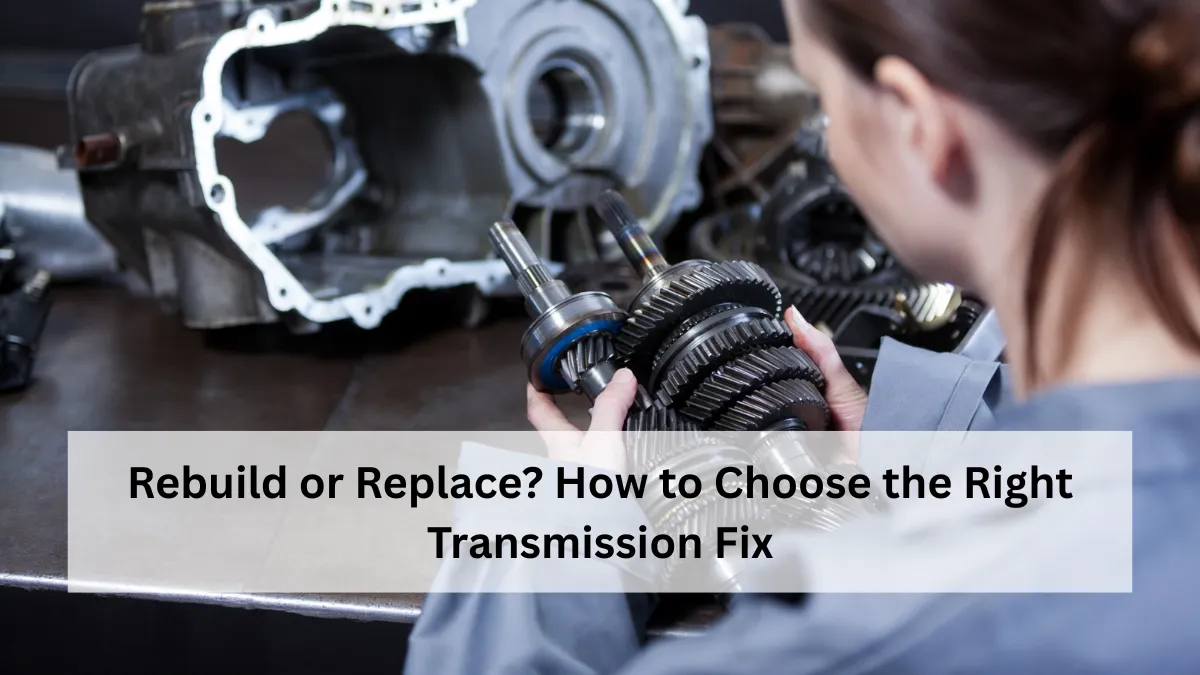
A transmission rebuild involves removing the transmission from the vehicle, disassembling it, inspecting each part, and replacing worn or damaged components. The original transmission case is reused, and only the failed internal parts are replaced or reconditioned.
A rebuild is customized to your specific transmission. If a clutch pack is worn or a seal has failed, only those parts are addressed. The goal is to restore the transmission to proper working condition without replacing the entire unit.
Rebuilds depend heavily on the technician’s skill and the quality of replacement parts. When done carefully, a rebuild can extend the life of a transmission significantly.
What a Transmission Replacement Means
Replacement involves removing the old transmission and installing another unit in its place. This replacement may be new, remanufactured, or used.
A new transmission is built to factory specifications and has never been used. A remanufactured transmission is rebuilt in a controlled facility with standardized processes and tested before installation. A used transmission comes from another vehicle and has unknown wear unless documented.
Replacement is often faster than rebuilding and may come with broader warranty coverage, depending on the source.
Step One: Confirm the Actual Problem
Before deciding on any fix, the first step is confirming that the transmission is truly the problem.
Many drivability issues feel like transmission failure but are caused by other components. A failing sensor, worn engine mount, or low fluid level can mimic transmission symptoms. A proper diagnostic check can prevent unnecessary repairs.
Ask for a clear explanation of what is wrong. A trustworthy shop should describe whether the issue is internal, electrical, or related to fluid or control systems. This information is critical in choosing the right solution.
Step Two: Evaluate the Severity of the Damage
Not all transmission problems are equal. The extent of the damage plays a major role in the decision.
If the issue is limited to worn clutches, seals, or a specific gear set, rebuilding may be reasonable. These problems are often repairable without replacing the entire unit.
If there is extensive damage, such as metal debris throughout the system or a cracked transmission case, rebuilding may not be practical. In such cases, replacement is often the safer choice.
A detailed inspection report helps clarify whether a rebuild is technically sound or if replacement is more realistic.
Step Three: Consider Your Vehicle’s Age and Mileage
Your car’s overall condition matters just as much as the transmission itself.
For a newer vehicle with moderate mileage, investing in a replacement or high-quality rebuild may make sense. The rest of the car likely has many years of life left, making the repair worthwhile.
For an older vehicle with high mileage, the decision becomes more complex. Spending a large amount on a transmission may not be practical if other major systems are nearing the end of their lifespan.
Think about how long you realistically plan to keep the vehicle and how dependable you need it to be.
Step Four: Compare Cost Versus Value
Cost is often the deciding factor, but it should be considered carefully.
A rebuild is usually less expensive upfront than a full replacement, especially if damage is limited. However, rebuild costs can increase if additional problems are discovered during disassembly.
Replacement often costs more initially but may offer better long-term value, especially with remanufactured units that include upgraded components and testing.
Instead of focusing only on the lowest price, consider what you are paying for in terms of reliability, warranty, and peace of mind.
Step Five: Understand Time and Downtime
Time without your vehicle can be a major inconvenience.
Rebuilding a transmission can take longer because the unit must be disassembled, repaired, and reinstalled. Delays can occur if parts are backordered or additional damage is found.
Replacement is often faster, especially when a remanufactured unit is readily available. For drivers who rely on their vehicle for daily commuting, this may be an important factor.
Ask for realistic timelines and factor in how long you can manage without your car.
Step Six: Review Warranty and Support
Warranty coverage varies widely and should not be overlooked.
Rebuild warranties depend on the shop and may cover parts and labor for a limited time or mileage. The coverage quality often reflects the confidence the shop has in its work.
Replacement transmissions, especially remanufactured ones, often come with longer warranties that may be honored nationwide. This can be helpful if you travel or relocate.
Always ask what is covered, what is excluded, and how warranty claims are handled.
Step Seven: Think About Long-Term Reliability
Reliability depends on several factors, not just the repair method.
A well-done rebuild by an experienced technician can perform reliably for many years. However, quality can vary from shop to shop.
Remanufactured replacements are rebuilt under standardized conditions and often include updated parts designed to correct known weaknesses. This can improve long-term performance.
Used transmissions may be less expensive but carry higher risk due to unknown wear history.
Matching the repair choice to your reliability expectations is key.
Common Mistakes to Avoid
Many drivers make decisions under stress and regret them later.
One common mistake is choosing solely based on price. The cheapest option may lead to repeated repairs or early failure.
Another mistake is skipping a second opinion when the diagnosis is unclear. Transmission repairs are complex, and confirmation can prevent costly errors.
Ignoring the overall condition of the vehicle is also risky. Fixing one major component does not stop others from failing.
Finally, rushing the decision without understanding warranty terms can lead to frustration if problems arise later.
Conclusion: Making the Right Choice for Your Situation
Choosing between rebuilding or replacing a transmission is not about finding a universal answer. It is about matching the solution to your vehicle, your budget, and your expectations.
By understanding why transmission problems occur, confirming the severity of the damage, and carefully weighing cost, time, warranty, and reliability, you can make a decision that feels confident rather than rushed.
FAQ’s
Is rebuilding always cheaper than replacing a transmission?
Not always. While rebuilds often start with a lower estimate, costs can rise if extensive damage is found. In some cases, a remanufactured replacement may offer better value for the price.
Can a rebuilt transmission be as reliable as a replacement?
Yes, if the rebuild is done correctly using quality parts. The technician’s experience plays a major role in the outcome.
How long does a transmission rebuild usually last?
Lifespan depends on driving habits, maintenance, and repair quality. Many rebuilt transmissions last several years when properly cared for.
Should I replace the transmission in a high-mileage car?
It depends on the car’s overall condition and your plans. If the vehicle is otherwise reliable and meets your needs, replacement may still make sense.
✨ You May Also Like ✨