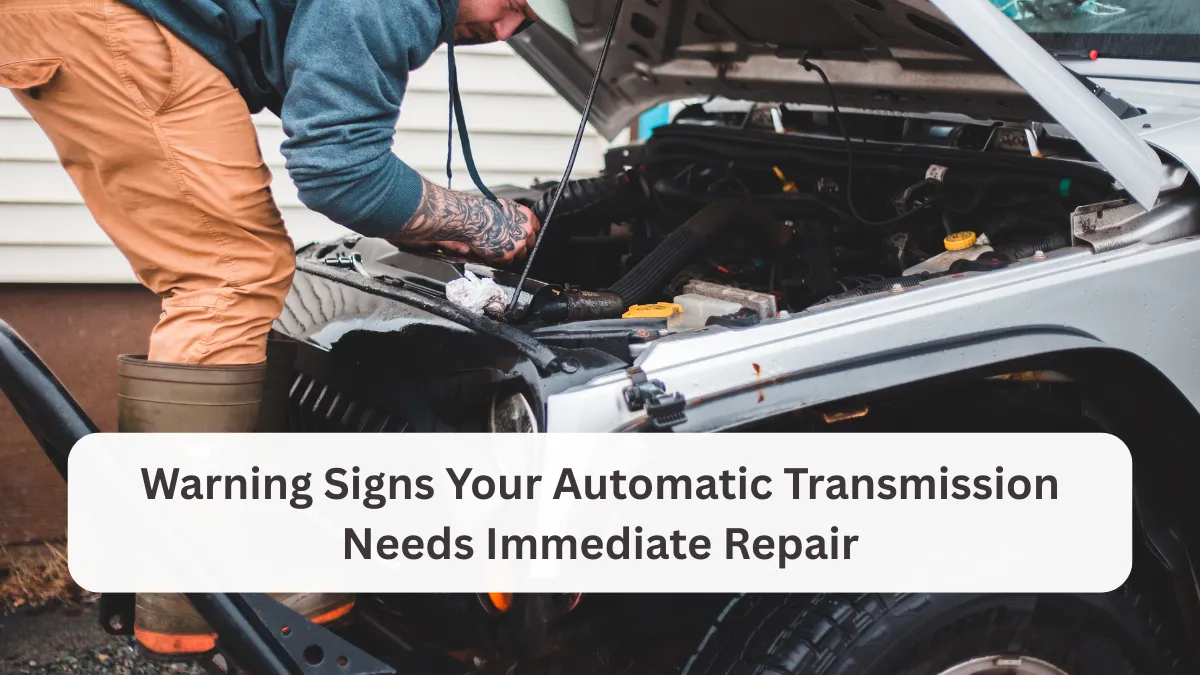
If you’ve ever felt your car hesitate or lurch while driving down a busy highway, you know that sinking feeling. Automatic transmissions handle the complex job of shifting gears for you, but when they start acting up, it can turn a simple commute into a real headache. Spotting the warning signs early can save you from a costly breakdown or a dangerous situation on the road.
I’ve spent over 20 years wrenching on vehicles in shops from California to New York, and I’ve seen it all—folks ignoring a slip here or a grind there until the whole thing gives out. This guide walks you through the key signs your automatic transmission needs immediate repair, why they happen, and what to do next. Let’s get into it so you can stay safe and keep moving.
Common Warning Signs Your Automatic Transmission Is Failing
Your transmission is like the heart of your car’s drivetrain, pumping power from the engine to the wheels. When it falters, you’ll notice it right away. Here are the most reliable indicators that something’s wrong, with details on how they feel in everyday driving.
Burning Smell from Under the Hood
One of the first clues I look for is a sharp, acrid burning odor, especially after a long drive. It might smell like burnt toast or overheating brakes, but it’s often transmission fluid cooking from excessive heat. This scent wafts up through the vents or lingers around the exhaust.
This isn’t something to wave off as “just the clutch.” In my experience, drivers in hot states like Texas or Arizona report this more often during summer traffic jams on I-10 or during Phoenix rush hours. If you’re idling at a drive-thru or stuck in construction, pull over and let it cool. I’ve had customers smell it first at a family picnic, only to have it worsen on the highway home. Catching it early might just need a fluid top-off, but ignore it, and you’re looking at internal damage.
Delayed or Harsh Shifting Between Gears
Picture this: You’re accelerating onto I-95 from a stoplight in Miami, and instead of smoothly shifting from first to second, your car pauses for a beat too long—or slams into gear like it’s angry. That hesitation feels like lost time in heavy traffic, and the thud can jolt passengers.
I’ve fixed countless sedans where this started as a minor annoyance but led to slipped gears. It’s especially noticeable in stop-and-go city driving, common for commuters in places like Chicago’s Loop or Los Angeles freeways. On inclines, like heading up to the Hollywood Hills, it becomes obvious. Test it by shifting manually if your car allows—does it protest?
Slipping Gears or RPMs Climbing Without Speed Gain
Slipping happens when your engine revs high (RPMs spike on the dash to 3,000+), but your speedometer barely budges. It’s as if the transmission is disengaging momentarily, like a belt slipping on a pulley, leaving you vulnerable during passes.
This sign showed up in a Ford Explorer I worked on last month—the owner thought it was just “old age,” but worn clutches inside were the culprit. Pay attention during highway merges on I-80 across Nebraska; it’s a safety risk when trucks are close. In family SUVs, it often hits after years of kid-hauling and grocery runs.
Strange Noises: Whining, Grinding, or Clunking
Listen closely when you shift into drive or reverse. A high-pitched whine that rises with speed often points to low fluid or a failing pump—think turbine spinning without enough lube. Grinding suggests metal-on-metal wear inside the planetary gears, like sand in a bearing. Clunking feels like a heavy thud from under the floorboards, usually on downshifts.
In rainy Seattle, I’ve seen rust contribute to these noises on older Hondas parked outdoors. Don’t dismiss them as “normal road noise”—rev the engine in neutral and park to isolate. During cold starts in Minnesota winters, whining amplifies as fluid thickens.
Fluid Leaks Under the Vehicle
Check your driveway or parking spot for reddish or brownish puddles, about the size of a dinner plate after overnight parking. Transmission fluid is typically bright red when fresh but darkens to brown like old coffee over time. A steady drip means seals, gaskets, or cooler lines are failing.
I once had a customer in Florida spot this after a beach trip to Clearwater; ignoring it led to total failure on the way home through Tampa traffic. Wipe the transmission pan, bellhousing, and tailshaft with a rag—shiny wetness confirms it. In apartment complexes nationwide, these puddles get missed until management complains.
Dashboard Warning Lights Illuminated
Modern cars like Toyotas, Chevys, or Dodges have a dedicated transmission temperature light (often a thermometer icon) or the amber check engine light that stays on. It might blink during shifts, signaling urgent codes.
This popped up frequently during my time in Detroit winters, where cold fluid thickens and stresses solenoids. Even in milder climates like Atlanta suburbs, overworked minivans trigger it during school runs. Note if it comes with reduced power.
Vehicle Stuck in One Gear or Limp Mode
If your car won’t shift past second gear or enters “limp mode” (crawling at 30-40 mph max), the transmission control module is protecting itself from further damage. It’s a built-in safety feature on vehicles from the last 15 years, flashing the dash.
A working mom in Atlanta brought me hers after a school run—it saved her engine but needed urgent solenoid repairs. Common in high-tech models like recent Jeeps or GMs.
Additional Red Flags to Watch For
Overheating gauge spiking without A/C on, vibrations through the seat at speed, or unusual engagement in park/reverse. In RVs popular in the Southwest, these combine during long hauls.
These signs don’t always appear alone; often, two or three team up. If you’re seeing any, park it and diagnose before driving far—better safe than stranded.
Why These Problems Develop in Automatic Transmissions
Understanding the root causes helps you prevent repeats and talk knowledgeably to mechanics. Automatic transmissions rely on a symphony of fluid pressure, valves, clutches, bands, and electronics to manage gears seamlessly. When parts wear or fail, chaos ensues. Let’s break it down simply, with layers peeled back.
Overheating: The Silent Killer
Heat is the number one enemy, building from friction and poor airflow. Fluid breaks down above 240°F, losing viscosity and lubrication properties—it turns from slippery protector to gritty paste. Traffic jams in places like Miami or Atlanta bake the system, especially if you’re towing a trailer or boat on weekends.
Towing without an auxiliary cooler? I’ve seen it warp torque converters in F-150s from the Midwest, where summer fairs mean heavy loads. Heat expands seals prematurely, leading to leaks and that burning smell. In stop-start cycles, like Uber drivers in New York, it compounds hourly.
Low or Contaminated Fluid Levels
Fluid acts as hydraulic fluid, lubricant, and coolant in one. Neglect changes (every 30,000-60,000 miles per your owner’s manual, or 100,000 with synthetics), and it turns to sludge from oxidation. Dirt from a clogged filter or external contaminants blocks tiny valves.
In dusty areas like Arizona or Oklahoma farmlands, airborne particles sneak in via breathers. Check your dipstick monthly—dark, gritty fluid with metallic flecks means clutches are shedding. Low levels cavitate the pump, starving the system.
Worn Clutches, Bands, and Gears
Inside the bellhousing, friction clutches engage gears like mini disc brakes, grabbing and releasing thousands of times daily. Bands wrap drums for low gears. Aggressive driving, stoplight launches, or heavy loads grind them thin.
A Chevy Silverado I repaired had bands stretched from hauling lumber to job sites in Colorado. Rust from salted roads in the Northeast—like Boston blizzards—eats at aluminum cases, causing grinding. Planetary gear sets, those epicyclic wonders, wear teeth from torque overload.
Electrical and Sensor Failures
Sensors (input/output speed, throttle position, temp) monitor everything, feeding data to the transmission control module (TCM). Faulty ones—cracked from heat or potholes—send bad signals, causing erratic shifts.
Wiring harnesses fray from road debris or critters nesting in engine bays. Battery issues in older cars spike voltages, frying solenoids that control fluid flow. Common in stop-start urban fleets like delivery vans in Seattle.
Neglect and Manufacturing Flaws
Skipping services or using off-brand fluid (wrong viscosity) shortens life dramatically. Some models, like certain Nissas or early CVTs from the 2000s, had inherent valve body weaknesses or software glitches. Overloading minivans for family road trips in California stresses servos.
Genetics play a role—high-mileage domestics like Jeeps hit issues around 150,000 miles without care, while imports endure longer with maintenance. Road salt in the Great Lakes region accelerates corrosion tenfold.
These factors compound like a snowball: A small leak leads to low fluid, overheating, worn parts, and electrical glitches. Regional habits matter—Southern heat vs. Northern cold both punish differently.
Step-by-Step Guide to Diagnose and Repair
Don’t DIY major fixes unless you’re experienced with tools and safety gear—transmissions hold pressurized fluid that sprays hot. But here’s how to assess safely and what pros do next, expanded for thoroughness.
Step 1: Perform a Basic Visual Inspection
Park on a clean, level surface after a 10-minute drive to warm fluid. Engage parking brake, chock wheels. Pop the hood and locate the dipstick (yellow or red handle, passenger side usually). Pull, wipe, reinsert, pull again—level between marks, color pink/red, no burnt smell.
Crawl underneath (use ramps, not jacks alone) with a flashlight. Inspect pan for wetness, bulging, or rust. Check cooler lines at radiator. In a garage like mine in Ohio, we use UV dye for hidden leaks. Note everything in photos.
Step 2: Test Drive with Observations
Take a short, safe 5-mile loop: cold start, idle shifts (P-R-N-D), gentle acceleration to 60 mph, highway on-ramp, stops, reverse maneuvers. Note slips (RPM flare), noises (whine pitch), shifts (harsh/delay). Use your phone’s voice memo: “3,000 RPM at 40 mph, clunk on 2-3.”
Avoid highways if slipping badly; recreate inclines or loads with passengers. In urban tests, like LA’s 405, note AC on vs. off effects.
Step 3: Check for Error Codes
Head to AutoZone or O’Reilly—they scan free with OBD-II tools. Look for P07xx (trans solenoids), P07A0 (clutch slip), or P0711 (temp sensor). Write codes, freeze-frame data (speed when lit).
In my shop, we cross-reference with ALLDATA for TSBs (technical service bulletins)—your model might have a known fix.
Step 4: Fluid and Filter Service (If Applicable)
For early overheating or slipping without metal, a drain-and-fill revives it. Jack safely, drain 4-6 quarts via pan plug, drop pan (18-20 bolts), replace filter/gasket ($20-50 parts). Clean magnet of debris, reassemble with torque wrench (10-15 ft-lbs).
Refill via dipstick while idling in park, check hot level. Full flush via machine? Only if clean pan. DIY costs $100; shop $150-300.
Step 5: Professional Diagnosis and Repair
Tow via flatbed (don’t roll in neutral). Shop lifts, pressure-tests lines (150-250 psi), borescope internals, road-tests with data logger.
Tiered fixes:
- Seals/gaskets: $200-500, 2 hours—common leak source.
- Solenoids/valve body: $400-800, cleans/rebuilds shifts.
- Torque converter/pump: $800-1,500, addresses whine/slip.
- Clutch packs: $1,500-2,500.
- Full rebuild: $2,000-4,000 (removal, teardown, new parts, dyno test)—beats $5,000+ reman unit.
RVs or trucks add $500 for labor. Get itemized quotes, 12-month warranty minimum.
Step 6: Post-Repair Verification and Break-In
Drive 100 easy miles: vary speeds, no heavy loads. Recheck fluid hot, scan codes clear. Shops log before/after data. Break-in: gentle shifts first 500 miles.
Follow these, and you’ll minimize downtime and costs.
Helpful Tips and Common Mistakes to Avoid
Stay ahead with these practical pointers from the trenches, plus checklists.
Prevention Checklist:
- Monthly dipstick checks.
- Fluid/filter every 50,000 miles (track in app).
- Auxiliary cooler for towing/hot climates ($200-400).
- Smooth driving: 2-second accel rule.
- Synthetic fluid upgrade at 100k miles.
Regional Tips:
- South: Coolers mandatory.
- North: Warm-up idles.
- Mountains: Cooler + frequent checks.
Pitfalls to Dodge:
- Ignoring slips—escalates exponentially.
- Overfilling (foams, slips worse).
- Generic rebuilds sans warranty.
- Flush on dirty fluid (washes debris into valves).
- Cheap ATF (wrong specs burn fast).
In Florida humidity, inspect breathers yearly. Log symptoms early.
FAQ
What does it cost to fix a slipping automatic transmission?
Costs range from $200 for a fluid service to $4,000 for a rebuild, depending on the issue and vehicle. Sedans are cheaper than trucks. Always get multiple quotes from ASE-certified shops.
Can I drive with transmission warning signs?
Short distances to a shop, yes—but avoid highways or loads. Slipping risks stranding you or causing accidents. Tow if leaks or limp mode hit.
How do I prevent transmission problems?
Regular fluid checks, timely services, and smooth driving go far. Add a cooler if you tow. High-mileage cars benefit from synthetic fluid upgrades.
Is a transmission flush the same as a drain-and-fill?
No—a drain-and-fill swaps 4-6 quarts safely. Flushes cycle all 12+ quarts but can harm neglected units by dislodging gunk. Pros assess first.
Why is my transmission making noise only in reverse?
Reverse uses different clutches and bands, often wearing first. Check fluid and get a pro look—could be a $500 fix before it spreads.
✨ You May Also Like ✨