Coin collecting has always been more than a simple pastime for many people. For some, it is a way to stay connected with history, culture, and fine craftsmanship. Among the many coins made in the United States, a few stand out not because of their small face value but because of their rarity, mistakes, or special features. The 1964 penny is one such coin that has caught the interest of collectors and investors over the years.
Historical Context of the 1964 Penny
The year 1964 played an important role in American coin production. During this time, the United States Mint produced large numbers of coins to support a fast-growing economy. Pennies, mostly made of copper, were widely used in daily life. However, some versions and minting mistakes from this year have made certain 1964 pennies much more valuable than their simple one cent face value.
Why the 1964 Penny Stands Out
Not every 1964 penny is worth more than one cent. The real value comes from certain details such as minting mistakes, overall condition, and rarity. Collectors pay close attention to coins that look different from normal production pieces. These differences may include doubled designs, off center strikes, or unusual metal mixes that make the coin stand apart from standard examples.
Mint Marks and Their Importance
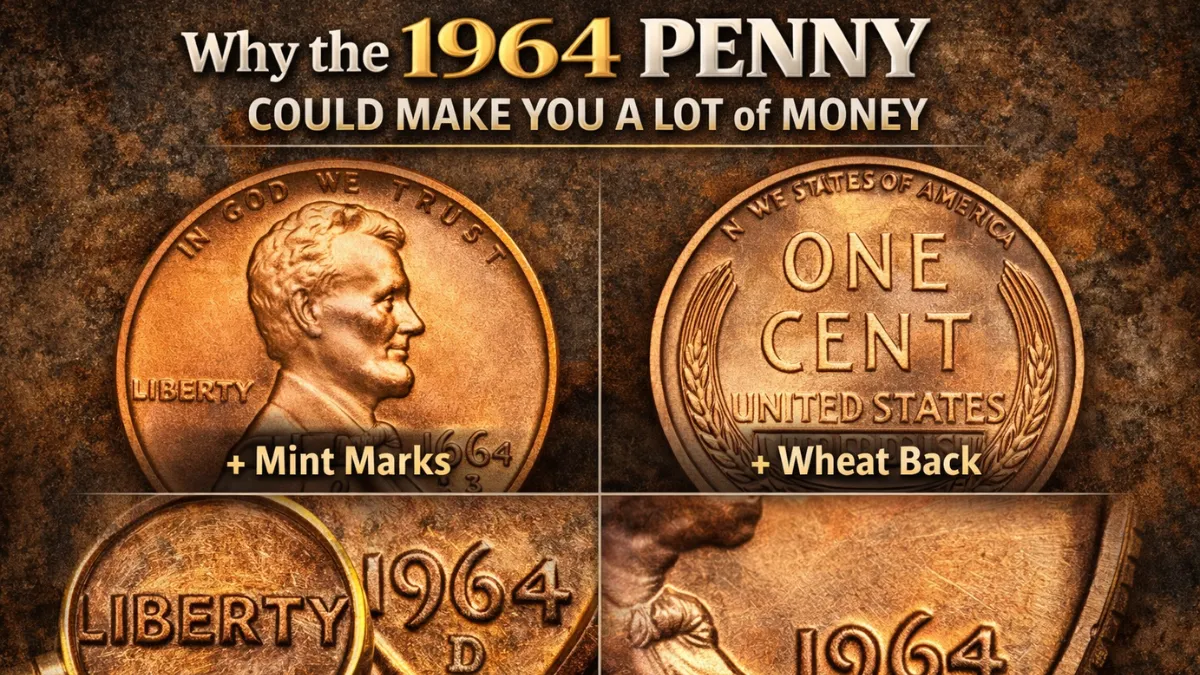
Mint marks are small letters on coins that show where they were made. In 1964, pennies were produced in Philadelphia Mint with no mint mark and in Denver Mint with a D mark. Coins from different mints can differ in rarity and demand. A 1964 penny from Denver in excellent condition may sell for more than a similar coin from Philadelphia.
Common Errors Found in 1964 Pennies
Mistakes are what make some coins truly valuable. Some well known errors seen on 1964 pennies include double designs on the front of the coin, off center strikes where the image is shifted, visible die cracks that create lines on the surface, and wrong planchet errors where the penny was struck on a blank meant for another coin. These errors are uncommon, and their rarity greatly increases their value.
Condition and Grading of 1964 Pennies
The condition of a coin plays a major role in deciding how much it is worth. Coins are graded from very poor condition to mint state. A 1964 penny in mint state shows no signs of wear and still has its original shine, which can make it far more valuable than a penny that has been used in circulation for many years.
How Much Can a 1964 Penny Be Worth
Most 1964 pennies are only worth their face value, but rare error coins and high grade examples can sell for hundreds or even thousands of dollars. A double die penny in mint condition could bring several hundred dollars at auction. The final price depends on how rare the coin is, how much collectors want it, and the overall condition.
Tips for Identifying Valuable 1964 Pennies
Collectors and investors should look closely at small details when checking 1964 pennies. They should search for unusual marks or doubling in the design, check the edges for signs of misaligned strikes, examine the mint mark for small differences, and compare the coin’s weight and metal content with official standards to spot anything unusual.
The Role of Copper in 1964 Pennies
Pennies made in 1964 were mostly copper. While copper itself has value, the true worth of these coins comes from how rare and well preserved they are. Changes in copper prices can sometimes affect how people view old pennies, but collectors mainly care about numismatic value rather than just the metal content.
Collecting as an Investment
Coin collecting is not only about enjoyment but can also be a form of long term investment. Rare coins like the 1964 penny may increase in value over time as more people become interested in collecting. Unlike stocks or bonds, coins are physical items that can be kept, displayed, and passed down to future generations.
Preservation and Storage of Valuable Pennies
To protect the value of a 1964 penny, proper storage is very important. Coins should be kept in protective holders to avoid scratches, discoloration, and moisture damage. Cleaning coins should be avoided because it can lower their value. Professional grading services can help confirm authenticity and protect coins for long term storage.
Comparing the 1964 Penny to Other Rare Pennies
The 1964 penny is not the only penny that collectors search for. Other famous examples include the 1943 Steel Penny and the 1955 Double Die Penny. Comparing these coins helps collectors understand how different errors and time periods affect value.
The Thrill of the Hunt
A big part of coin collecting is the excitement of searching. Finding a rare 1964 penny in everyday change or in an old container can be very exciting. Many collectors enjoy carefully checking coins, learning their history, and uncovering hidden treasures that others may overlook.
Final Thoughts on the 1964 Penny
The 1964 penny may look ordinary at first, but under the right conditions it can be worth a surprising amount of money. Whether because of rare errors, perfect condition, or special features, these coins have a meaningful place in numismatics. For collectors and investors, the 1964 penny represents history and opportunity, showing how a small coin can sometimes bring big rewards.
✨ You May Also Like ✨