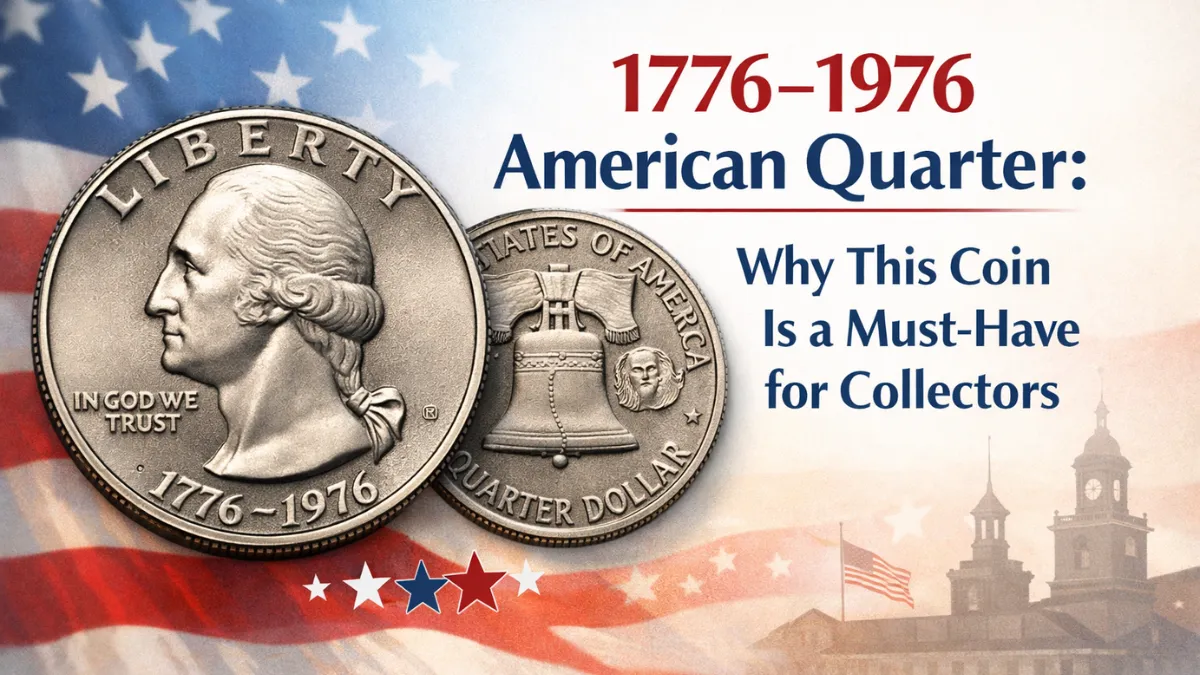
In 1976, the United States celebrated its 200th birthday. Fireworks lit up the sky, parades filled the streets, and a special coin quietly entered millions of pockets. That coin—the 1776–1976 American Quarter—has since become one of the most recognized commemorative coins in U.S. history. While it may look ordinary at first glance, this Bicentennial quarter carries historical meaning, unique design features, and real value for collectors.
Whether you are a beginner in coin collecting or someone looking to understand why certain coins gain attention over time, this guide explains why the 1776–1976 quarter deserves a place in your collection.
A Special Tribute to America’s 200th Birthday
The 1776–1976 quarter was created to mark the Bicentennial of the United States. Instead of the usual single-year date, this coin features a dual date: “1776–1976.” This symbolizes 200 years since the signing of the Declaration of Independence.
The reverse (back) of the coin is what truly sets it apart. Instead of the traditional eagle design, it features a Colonial drummer boy with a victory torch encircled by 13 stars. These stars represent the original 13 colonies. The design was selected through a national competition, giving it both artistic and historical significance.
Unlike many commemorative coins that are produced in limited numbers and rarely circulate, this quarter was released for everyday use. That makes it unique: it is both common and collectible.
Who Designed the Bicentennial Quarter?
The reverse design was created by Jack L. Ahr, whose drummer boy artwork was chosen from thousands of submissions. The obverse (front) still features the familiar portrait of George Washington, originally designed by John Flanagan in 1932.
By combining a historic leader with a patriotic drummer symbolizing the American Revolution, the coin captures the spirit of independence and celebration in one small piece of metal.
How Many Were Made?
One reason this coin often surprises collectors is the large number produced. More than 1.6 billion Bicentennial quarters were minted across three facilities:
- Philadelphia (no mint mark)
- Denver (D mint mark)
- San Francisco (S mint mark)
Because of this high mintage, most circulated Bicentennial quarters are not rare. However, rarity is not the only reason collectors value a coin. Condition, composition, and mint variety play an important role.
Silver vs. Clad: Understanding the Difference
Most 1776–1976 quarters found in circulation are copper-nickel clad coins. However, the San Francisco Mint also produced special 40% silver versions for collectors.
Here’s how they differ:
- Clad Coins: Made for circulation, common, and usually face value unless in excellent condition.
- 40% Silver Coins: Sold in special collector sets, heavier, and contain actual silver content, making them more valuable.
If you are searching through old coin sets or inherited collections, checking for the “S” mint mark and verifying the metal content can make a significant difference.
What Makes This Coin Valuable?
Although most Bicentennial quarters are worth 25 cents in circulated condition, certain examples can command higher prices. Here’s what increases value:
1. Mint Condition (Uncirculated or Proof)
Coins with sharp details, no wear, and strong luster are more desirable. Proof versions, especially those struck in silver, often carry higher premiums.
2. Silver Composition
The 40% silver versions typically hold value based on both collector demand and silver content.
3. Mint Errors
Occasionally, coins are struck with errors such as double dies, off-center strikes, or missing clad layers. These error coins can be significantly more valuable.
4. Graded Coins
Coins professionally graded and certified by recognized grading services often attract serious collectors. High-grade examples (MS67 and above) can bring strong prices at auction.
Why Collectors Still Love It
Even though the Bicentennial quarter is not extremely rare, it remains highly popular for several reasons:
- It represents a major national milestone.
- It has a unique design not repeated in modern circulation.
- It is affordable for beginners.
- It offers opportunities to learn about grading, silver content, and mint varieties.
For new collectors, this coin is often one of the first pieces added to a collection. It teaches the basics of condition, composition, and historical context without requiring a large investment.
Tips for Collecting the 1776–1976 Quarter
If you’re considering adding this coin to your collection, keep these practical tips in mind:
Check Condition Carefully
Look for coins with minimal scratches, strong detail in the drummer’s uniform, and clear lettering.
Store Properly
Keep coins in protective holders or albums to prevent damage. Avoid touching the surface directly with bare hands.
Verify Silver Content
If you suspect a coin is silver, weigh it carefully. Silver versions are slightly heavier than clad ones.
Consider Complete Sets
Some collectors enjoy owning all three mint versions (Philadelphia, Denver, and San Francisco), including both clad and silver proofs.
Avoid Overpaying
Because the coin is common, research current market prices before making large purchases.
A Piece of History in Your Pocket
The 1776–1976 American Quarter stands out because it connects everyday currency with a defining moment in U.S. history. It was not created solely for collectors but for the entire nation. Millions of Americans used it during the Bicentennial celebrations, making it both a circulating coin and a historical keepsake.
For experienced collectors, high-grade and silver examples offer meaningful additions to a portfolio. For beginners, it offers an affordable starting point. Its blend of history, symbolism, and accessibility makes it a must-have for many coin enthusiasts.
While it may not be the rarest coin in American history, its story and design ensure it remains one of the most memorable.
FAQ’s
Is the 1776–1976 quarter rare?
Most are common due to high mintage, but silver versions and high-grade coins can be harder to find and more valuable.
How can I tell if my Bicentennial quarter is silver?
Check for an “S” mint mark and weigh it; silver versions are heavier and were sold in special collector sets.
Are Bicentennial quarters worth more than face value?
Circulated clad coins are usually worth face value, but silver or high-grade examples can be worth more.
What mint marks exist for the 1776–1976 quarter?
Philadelphia has no mark, Denver shows “D,” and San Francisco displays an “S” mint mark.
✨ You May Also Like ✨