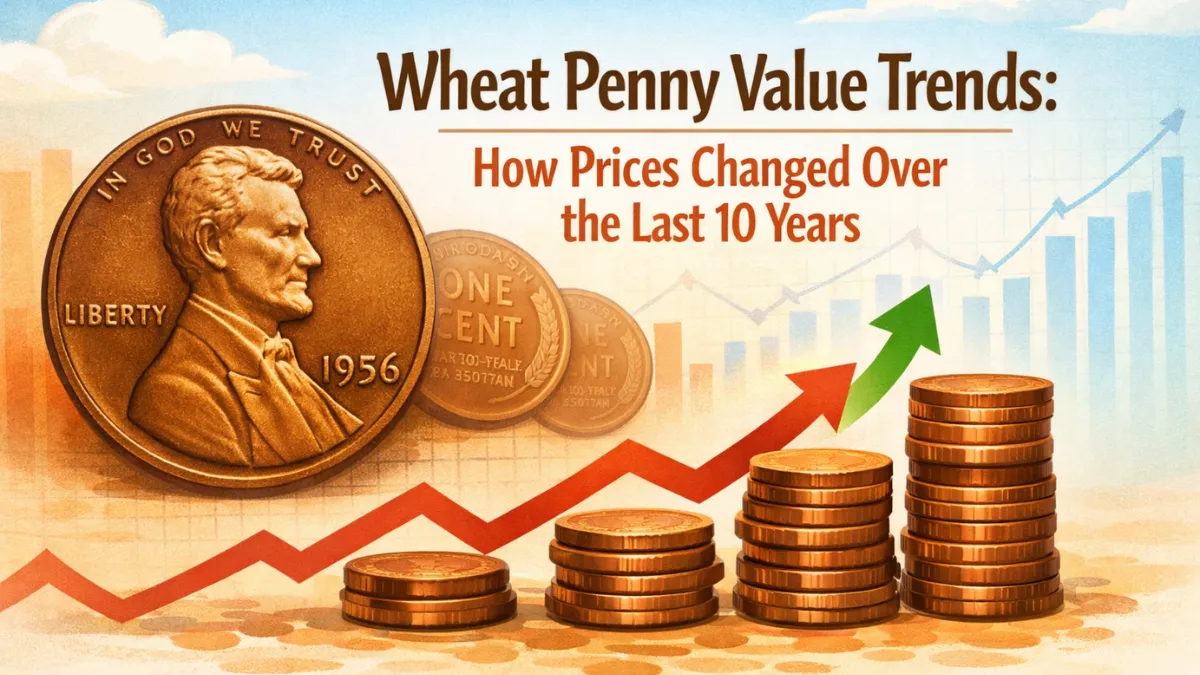
Wheat pennies have remained one of the most collected coins in the United States for decades. Officially called the Lincoln Wheat Cent, these coins were minted from 1909 to 1958 and are easily recognized by the two wheat stalks on the reverse side. Many people discover them in old jars, inherited collections, or pocket change and immediately wonder if they are valuable. Over the past ten years, the value of wheat pennies has moved through periods of steady growth, sudden demand spikes, and eventual stabilization. Understanding these trends helps collectors make informed decisions instead of relying on rumors or exaggerated claims.
Why Wheat Pennies Remain Popular
The wheat penny features the portrait of Abraham Lincoln, making it historically significant as the first U.S. coin to depict a real person. Its long production run means millions were made, but certain dates and mint marks are much rarer than others. Collectors are drawn to wheat pennies because they are affordable, historically meaningful, and easy to store. Over the last decade, this consistent popularity has played a key role in maintaining demand, even during economic shifts. While most circulated coins are worth only a few cents above face value, rare examples in strong condition can command much higher prices.
2016 to 2018: Stable and Predictable Market
Between 2016 and 2018, wheat penny values were relatively stable. The broader coin market was calm, and pricing did not fluctuate dramatically. Common circulated wheat pennies generally sold between three and ten cents each. Key dates such as the 1914-D and 1931-S showed gradual appreciation, especially in higher grades. Professional grading services continued to influence pricing, as collectors increasingly preferred certified coins for authenticity and condition assurance. During this period, the market reflected slow but steady growth without sudden spikes.
2019 to 2021: A Sharp Increase in Demand
The period from 2019 to 2021 marked a noticeable shift. During the global pandemic, many people rediscovered hobbies, including coin collecting. As individuals spent more time at home, online marketplaces experienced a surge in activity. Wheat pennies, being affordable and widely recognized, benefited from this renewed interest. Rare dates saw competitive bidding, and even mid-grade examples experienced stronger pricing. Some key coins rose by 15 to 30 percent compared to pre-2019 levels. High-grade Mint State coins performed particularly well, as collectors with more disposable income sought quality additions to their collections.
2022 to 2023: Cooling and Market Correction
After the surge, the market began to normalize in 2022 and 2023. Prices for common wheat pennies softened slightly, returning closer to pre-pandemic levels while still remaining modestly higher overall. Collectors became more selective, focusing on coins with strong eye appeal and verified grading. Inflation and economic uncertainty influenced discretionary spending, leading some buyers to reduce impulse purchases. However, rare and top-quality coins maintained solid performance, demonstrating that scarcity and condition continue to drive long-term value.
2024 to 2025: Transparency and Balanced Growth
In the most recent years, the wheat penny market has become more transparent. Collectors now have easy access to auction records and population data, which helps set realistic pricing expectations. Common circulated wheat pennies typically trade in the five to fifteen cent range, depending on condition and date. Premium examples, particularly those graded MS65 and above, continue to command strong prices. The influence of online auctions has created a more balanced marketplace where exaggerated pricing is quickly corrected by informed buyers.
Approximate Value Trends Over the Last 10 Years
The following table shows general retail ranges for common circulated wheat pennies and selected key-date coins in mid-grade condition. These figures are approximate and reflect overall market trends rather than exact pricing.
| Year Range | Common Circulated (Typical Range) | Key Dates Mid-Grade (Typical Range) |
|---|---|---|
| 2016–2018 | $0.03 – $0.10 | $150 – $900 |
| 2019–2021 | $0.05 – $0.20 | $200 – $1,200 |
| 2022–2023 | $0.04 – $0.15 | $190 – $1,100 |
| 2024–2025 | $0.05 – $0.15 | $200 – $1,300 |
These values show that while common coins experienced small fluctuations, key dates saw stronger appreciation over time, particularly during peak demand years.
What Drives Wheat Penny Prices
Several consistent factors have shaped value trends over the last decade. Rarity remains the most important factor, especially for coins with low mintages. Condition also plays a major role, as even minor wear can significantly affect price. Professional grading adds credibility and often increases buyer confidence. Economic conditions influence spending habits, and digital marketplaces have made price comparison easier than ever. Together, these factors create a market that is more informed and stable than in previous decades.
Final Thoughts
Over the past ten years, wheat penny values have demonstrated resilience and gradual growth, with temporary surges driven by external factors such as increased hobby participation during the pandemic. While most wheat pennies will never be extremely valuable, certain rare dates and high-grade examples have shown consistent appreciation. The modern market benefits from better data access, improved transparency, and a more educated collector base. For those interested in starting or expanding a collection, wheat pennies remain an accessible entry point into numismatics. By focusing on rarity, condition, and verified information, collectors can make informed decisions and enjoy the historical charm these coins continue to offer in 2025 and beyond.
FAQ’s
Are wheat pennies from the 1940s valuable?
Most 1940s wheat pennies are common and worth a few cents, unless they are rare errors or in high Mint State grades.
Why did wheat penny prices rise during 2020?
Increased home-based hobbies and strong online buying activity boosted demand, especially for rare and graded coins.
How much is a typical wheat penny worth today?
Common circulated wheat pennies usually sell for 5 to 15 cents, depending on date and condition.
Do mint marks affect wheat penny value?
Yes, coins from certain mints like Denver or San Francisco can be rarer and often sell for higher prices.
✨ You May Also Like ✨