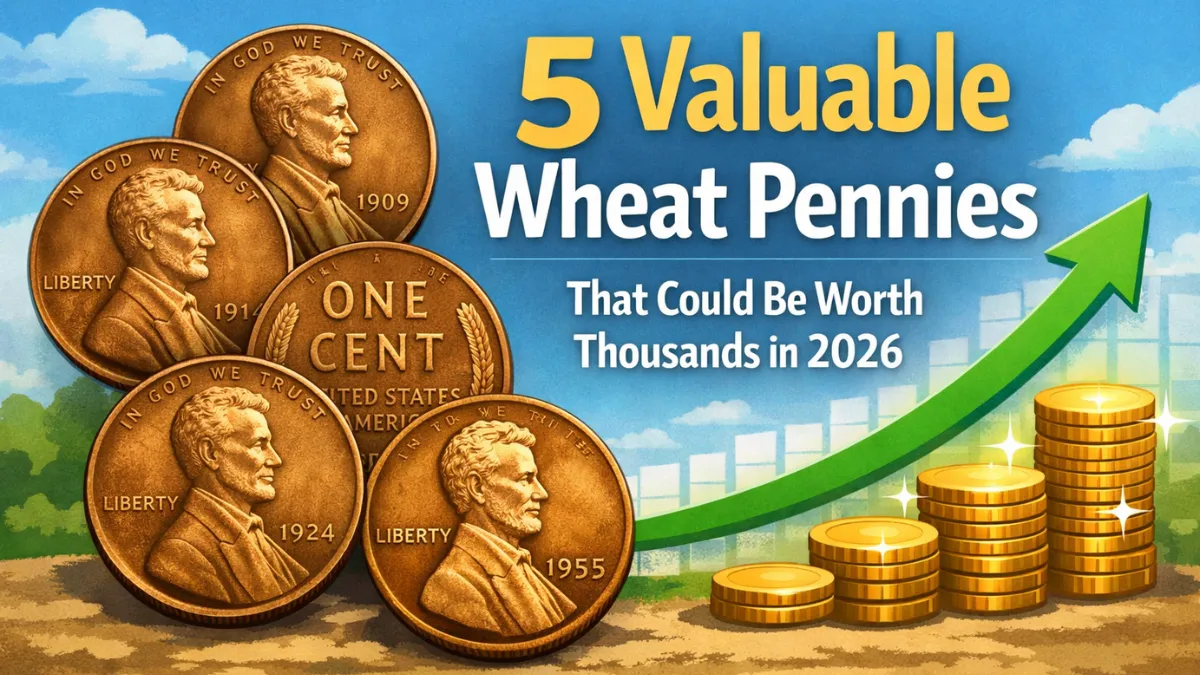
Old coins often sit quietly in jars, drawers, or inherited collections. But some of these small copper pieces could be worth far more than their face value. Wheat pennies, officially known as the Lincoln Wheat Cent, are among the most collected coins in American history. While most are worth only a few cents, a few rare dates and minting errors can bring in thousands of dollars in today’s market—and possibly even more in 2026 as collector demand continues to grow.
If you have old pennies stored away, this guide will help you understand which Wheat pennies are truly valuable, why they matter, and how to identify them correctly without falling for common myths.
What Is a Wheat Penny?
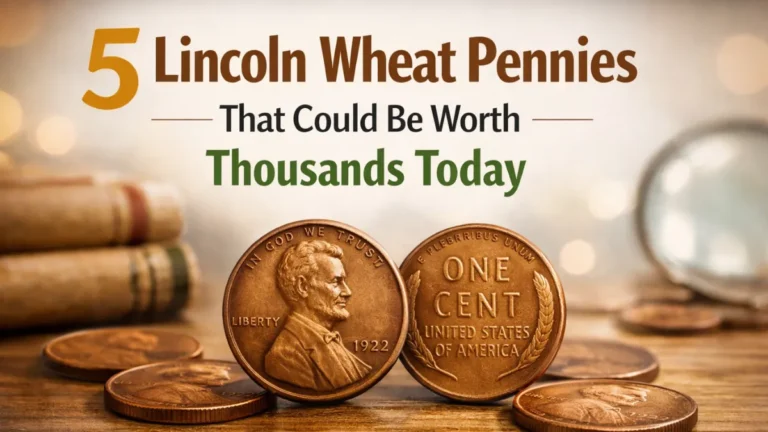
The Wheat penny was first issued in 1909 to celebrate the 100th birthday of President Abraham Lincoln. Designed by Victor D. Brenner, the coin features Lincoln’s portrait on the front and two wheat stalks on the back. These coins were minted from 1909 to 1958 before being replaced by the Lincoln Memorial design.
Most Wheat pennies were made in large numbers, but certain rare dates, mint marks, and minting mistakes make a few of them extremely desirable among collectors.
1. 1909-S VDB Wheat Penny
The 1909-S VDB is one of the most famous coins in American collecting history. The “S” mint mark indicates it was struck in San Francisco, and “VDB” are the initials of the designer on the reverse side.
Only about 484,000 were minted, which is a very low number compared to other pennies of the time. Because of this limited production, it remains highly sought after.
In circulated condition, this coin can sell for several hundred to several thousand dollars depending on its grade. In high mint state condition, values can reach well over $10,000. In 2026, strong collector demand may continue to support high prices for well-preserved examples.
How to identify:
- Look for the “S” mint mark below the date.
- Check for “VDB” on the bottom reverse.
- Beware of altered coins where mint marks are added.
2. 1914-D Wheat Penny
The 1914-D Wheat penny, minted in Denver, is another key date in the series. While over one million were produced, far fewer survived in high-grade condition.
Collectors value this coin because it is difficult to find in uncirculated condition. In worn condition, it may sell for several hundred dollars. In better condition, it can reach into the thousands.
What makes it valuable:
- Low survival rate in high grade.
- Strong demand from Lincoln cent collectors.
- Frequently counterfeited due to its value.
Always verify the “D” mint mark carefully and consider professional authentication for higher-value examples.
3. 1922 No D Wheat Penny
The 1922 No D penny is unique because all 1922 Lincoln cents were minted in Denver. However, due to worn dies, some coins were struck without a visible “D” mint mark.
This variety is highly collectible because it represents a clear minting error from the production process. A genuine 1922 No D in good condition can sell for several hundred dollars, while higher-grade examples may reach several thousand.
Identification tips:
- The date should read 1922.
- No visible “D” mint mark.
- Strong reverse detail helps confirm authenticity.
Counterfeits and altered coins exist, so careful examination is essential.
4. 1931-S Wheat Penny
The 1931-S penny was minted during the Great Depression, when demand for new coins was low. As a result, only about 866,000 were produced.
Although many were saved by collectors at the time, it is still considered a key date. In circulated condition, it may be worth a few hundred dollars. Uncirculated examples can reach into the low thousands depending on quality.
Why collectors value it:
- Low mintage during an important historical period.
- Key date in completing a Lincoln cent collection.
- Steady demand among long-term collectors.
5. 1955 Doubled Die Wheat Penny
The 1955 Doubled Die penny is famous for its dramatic error. Due to a misalignment during minting, the date and lettering appear clearly doubled to the naked eye.
This striking visual error makes it one of the most popular error coins in U.S. history. Even in worn condition, it can sell for over $1,000. High-grade examples can reach several thousand dollars or more.
How to spot it:
- Strong doubling on the date.
- Noticeable doubling in “LIBERTY” and “IN GOD WE TRUST.”
- Clear separation in lettering.
Many lesser forms of machine doubling exist, so careful comparison with verified examples is important.
Why These Wheat Pennies Could Be Worth More in 2026
Coin values depend on rarity, condition, and demand. As interest in tangible assets and collectibles continues to grow, rare coins often benefit from increased attention.
Several factors may support higher values in 2026:
- Growing online coin communities.
- Increased awareness through media coverage.
- Limited supply of high-grade examples.
- Strong long-term collector demand.
However, coin markets can fluctuate. Not every Wheat penny will increase in value. Only certified rare dates and verified error coins with strong condition typically command high prices.
How to Check If Your Wheat Penny Is Valuable
If you think you have a rare Wheat penny, follow these practical steps:
- Examine the date and mint mark carefully.
- Use a magnifying glass to inspect details.
- Avoid cleaning the coin, as cleaning reduces value.
- Compare with verified examples from reputable sources.
- Consider professional grading for potentially valuable coins.
Professional grading services can authenticate and assign a condition grade, which significantly affects value.
Final Thoughts
Wheat pennies are more than just old coins. They are small pieces of history that reflect different eras of American life. While most are worth only a few cents, certain rare dates and minting errors can be worth thousands of dollars, especially in strong condition.
If you have inherited a collection or saved old coins over the years, it may be worth taking a closer look. Even one rare find like a 1909-S VDB or 1955 Doubled Die could hold significant value. As 2026 approaches, collector demand and limited supply may continue to make these five Wheat pennies highly desirable.
Always focus on careful identification, authenticity, and condition. Knowledge is the key to turning a simple penny into a valuable discovery.
FAQ’s
How can I tell if my Wheat penny is valuable?
Check the date, mint mark, and condition. Rare years and visible errors raise value significantly.
Should I clean my old Wheat pennies before selling?
No. Cleaning can damage the surface and lower the coin’s market value.
Are all 1943 Wheat pennies valuable?
Most are steel and common, but rare bronze 1943 errors can be extremely valuable.
Does the mint mark location affect value?
Yes. Mint marks like S or D can make certain dates much rarer and more valuable.
✨ You May Also Like ✨