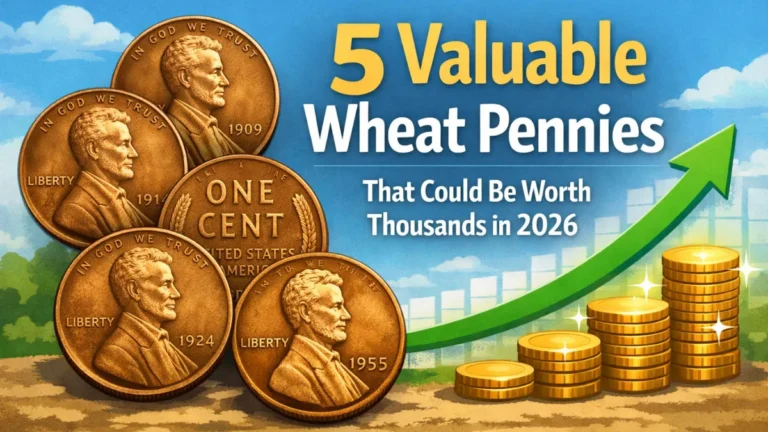
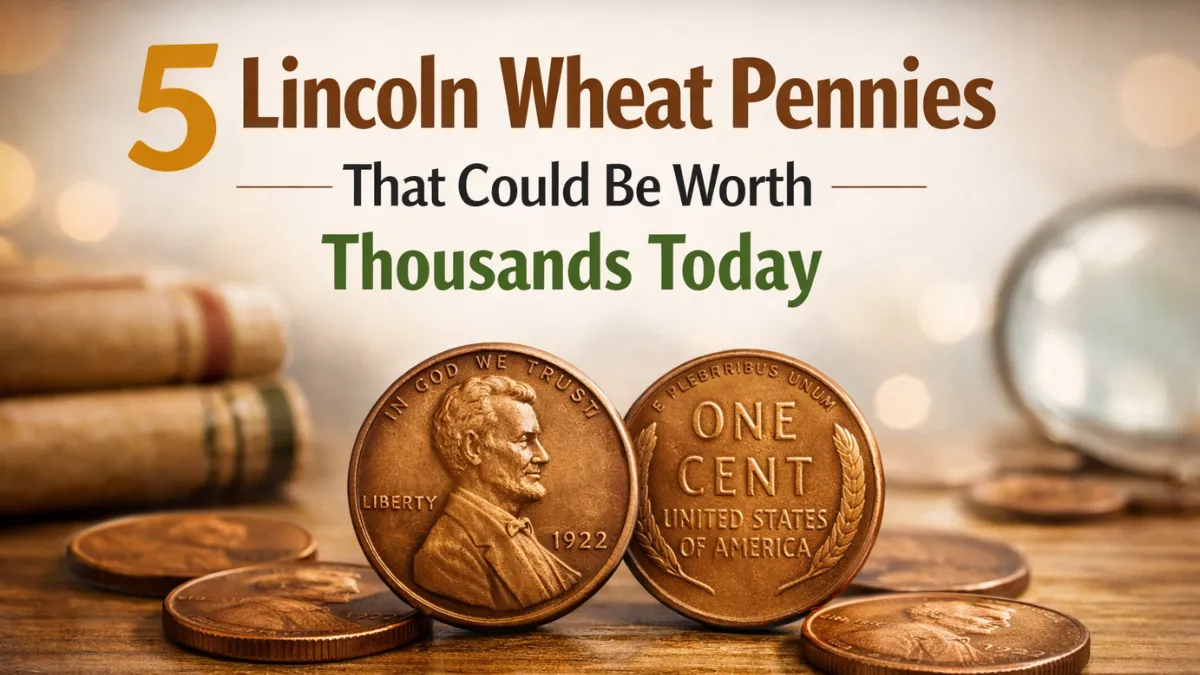
A small copper coin may not look like much, but certain Lincoln Wheat Pennies have surprised collectors with values reaching into the thousands. Many people still have old pennies stored in jars, drawers, or inherited collections. While most are common, a few rare dates and minting errors stand out in the numismatic world. Understanding which coins matter—and why—can help you make informed decisions and avoid costly mistakes.
The Lincoln Wheat Penny was minted from 1909 to 1958. It features Abraham Lincoln on the front and two wheat stalks on the back. Over the decades, billions were produced, but scarcity, condition, and production errors have made certain versions highly desirable among collectors.
1909-S VDB Lincoln Wheat Penny
The 1909-S VDB penny is one of the most recognized key dates in the series. Minted in San Francisco, it carries the “S” mintmark below the date and the initials “VDB” of designer Victor David Brenner on the reverse. Only 484,000 were produced before the initials were removed due to public criticism, making it scarce from the beginning.
Because of its low mintage and historical significance as part of the first year of issue, collectors strongly pursue this coin. Even in circulated condition, it can sell for hundreds or thousands of dollars. In higher grades with strong detail and original luster, values increase significantly. However, this coin is frequently counterfeited, so professional authentication is strongly recommended before buying or selling.
1914-D Lincoln Wheat Penny
The 1914-D penny, minted in Denver, had a relatively low production of just over 1.1 million coins. Many entered circulation and experienced heavy wear, making well-preserved examples difficult to find today.
Collectors consider this coin essential for completing a Lincoln Wheat Penny set. Even moderately worn examples can command strong prices. In higher grades, its value rises sharply. One common issue involves altered dates, where other pennies are modified to resemble the 1914-D. Careful inspection of the mintmark style and date spacing is necessary to avoid costly errors.
1922 No D Lincoln Wheat Penny
In 1922, the Denver Mint was the only facility producing Lincoln cents. However, a worn die caused some coins to be struck without a visible “D” mintmark. These are known as the 1922 “No D” pennies.
This error makes the coin unusual because all legitimate 1922 cents should have been minted in Denver. The most valuable versions show a strong reverse design paired with a missing mintmark. Values vary depending on clarity and overall condition, but attractive examples can reach thousands of dollars. Because mintmarks can be removed intentionally, authentication plays an important role in confirming legitimacy.
1931-S Lincoln Wheat Penny
The 1931-S penny was minted during the Great Depression when demand for new coins was low. As a result, only about 866,000 were produced. Unlike some earlier rare coins, many 1931-S pennies were saved by collectors at the time, which means uncirculated examples are more available than other low-mintage dates.
Still, the limited production keeps demand steady. Circulated examples can sell for hundreds of dollars, while well-preserved coins with original red color can reach significantly higher prices. This coin’s historical context adds to its appeal among collectors who appreciate both rarity and story.
1955 Doubled Die Lincoln Wheat Penny
The 1955 Doubled Die penny is one of the most dramatic and famous minting errors in U.S. coin history. A die misalignment caused clear doubling in the date and lettering on the obverse. The words “LIBERTY” and “IN GOD WE TRUST” show obvious duplication visible without magnification.
Because the error is easy to see, it became widely recognized even outside collector circles. Many examples entered circulation before the mistake was noticed. Today, even worn specimens can sell for over a thousand dollars, while higher-grade coins can command much more. It is important to distinguish true doubled die coins from minor mechanical doubling, which does not carry the same value.
Value Overview Table
| Coin Name | Mint Location | Key Feature | Why It’s Valuable | Potential Value Range* |
|---|---|---|---|---|
| 1909-S VDB | San Francisco | Low mintage + VDB initials | First-year rarity | $700 – $15,000+ |
| 1914-D | Denver | Low production | Key date scarcity | $300 – $10,000+ |
| 1922 No D | Denver | Missing mintmark error | Unique mint error | $500 – $12,000+ |
| 1931-S | San Francisco | Great Depression low mintage | Limited supply | $150 – $5,000+ |
| 1955 Doubled Die | Philadelphia | Visible doubling error | Famous mint mistake | $1,000 – $25,000+ |
*Values depend heavily on condition, authenticity, and market demand.
How to Evaluate Your Penny
If you believe you may have one of these rare pennies, start by examining the date and mintmark under good lighting. Compare design details carefully, and never clean the coin, as cleaning can reduce value significantly. Store it safely in a protective holder to prevent further wear.
For coins that appear promising, professional grading services can verify authenticity and assign an official condition grade. This not only builds buyer confidence but also ensures accurate valuation. Keep in mind that coin markets fluctuate, so prices may vary based on collector demand and overall economic trends.
Final Thoughts
Lincoln Wheat Pennies remain one of the most popular collectible coins in the United States. While most are common, a small number hold remarkable value due to scarcity, mint errors, and historical significance. By understanding what makes certain dates special, you can make smarter decisions when reviewing old coins. Sometimes, a single penny tucked away in a forgotten jar can represent a meaningful piece of history—and potentially a significant financial discovery.
FAQ’s
How do I know if my Lincoln Wheat Penny is rare?
Check the date and mintmark under good light. Rare years like 1909-S VDB or 1914-D, and major errors like 1955 Doubled Die, are highly valuable.
Where is the mintmark located on a Lincoln Wheat Penny?
The mintmark appears just below the date on the front (obverse) of the coin. It may show as “S” for San Francisco or “D” for Denver.
Does the condition of the penny really affect its value?
Yes. Coins in better condition with sharp details and minimal wear can be worth significantly more than heavily circulated examples.
Should I clean my old Wheat Penny before selling it?
No. Cleaning can scratch or damage the surface, reducing its collectible value and making it less attractive to serious buyers.
✨ You May Also Like ✨