For many drivers in the United States, the transmission is one of the least understood parts of a vehicle — and also one of the most expensive to repair when something goes wrong. People often notice small changes first: delayed shifting, strange noises, slipping between gears, or a warning light on the dashboard.
The problem is that these signs are easy to ignore, especially when the car still “mostly” works. By the time the vehicle stops driving properly, the damage is often more serious and more costly. That is why professional transmission inspections exist. They are designed to identify early issues, explain what is happening, and help prevent small problems from turning into major ones.
This article explains what actually happens during a professional transmission inspection, why each step matters, and what drivers should realistically expect when they take their vehicle in for one.
Why Transmission Problems Happen
A transmission is responsible for transferring engine power to the wheels while adjusting torque and speed. It works under constant stress, heat, and friction. Over time, internal parts wear down, fluid degrades, seals harden, and electronic sensors can drift out of calibration.
In automatic transmissions, fluid plays a central role. It lubricates, cools, cleans, and provides hydraulic pressure for gear changes. If the fluid becomes dirty, low, overheated, or contaminated, the transmission can no longer operate as designed.
Manual transmissions have fewer hydraulic components, but they still rely on lubrication and proper clutch operation. Wear on synchronizers, bearings, or the clutch itself can create shifting problems that feel similar to automatic failures.
Environmental factors also contribute. Stop-and-go traffic, towing, driving in hot climates, aggressive acceleration, and infrequent maintenance all increase transmission stress.
A professional inspection exists to connect symptoms with their real causes before irreversible damage occurs.
What a Professional Transmission Inspection Is
A professional transmission inspection is a structured evaluation performed by a trained technician using visual checks, diagnostic tools, road testing, and fluid analysis. The goal is not simply to find a problem, but to understand its severity, its root cause, and whether it is safe to keep driving.
Unlike a quick look under the hood, a proper inspection follows a methodical process that examines the transmission as a system rather than as a single part.
Step One: Customer Interview and Symptom Review
The inspection begins with a conversation. The technician or service advisor asks when the problem started, how often it happens, and under what conditions. For example, the vehicle may shift normally when cold but hesitate when warm, or it may slip only on hills or during highway merging.
This information is essential because transmissions can behave differently depending on temperature, load, and driving style. The technician uses the driver’s description to decide which systems need closer attention.
Step Two: Visual Inspection Under the Hood and Under the Vehicle
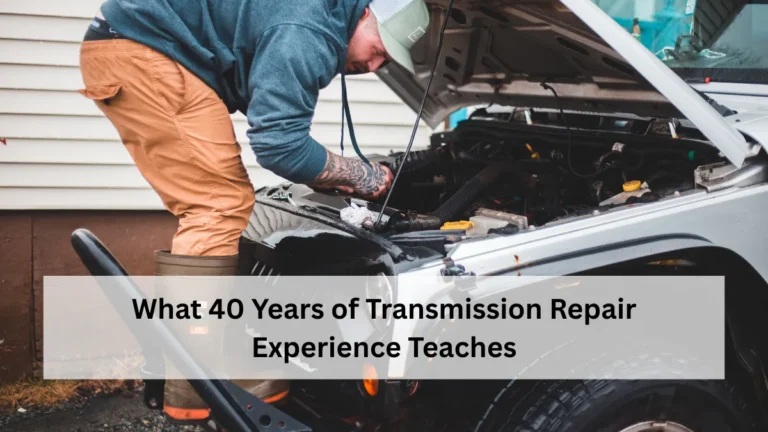
The technician then performs a visual inspection. This includes checking for fluid leaks around seals, hoses, coolers, and transmission pans. Any sign of wetness or residue may indicate a leak that is reducing fluid level over time.
The condition of the transmission mount and surrounding components is also checked. Broken mounts can cause vibration and misalignment that mimic internal transmission problems.
Electrical connections are inspected for corrosion, loose plugs, or damaged wiring. Modern transmissions rely heavily on electronic control modules and sensors, and even a small wiring issue can cause shifting problems.
Step Three: Transmission Fluid Inspection
Transmission fluid is examined carefully. The technician checks the fluid level, color, smell, and texture.
Healthy fluid is typically red or amber and has a slightly sweet or neutral smell. Burnt-smelling, dark, or gritty fluid suggests overheating, internal friction, or contamination.
Low fluid levels may indicate a leak, while foamy fluid can suggest overfilling or air intrusion. Both conditions can cause erratic shifting and damage.
The fluid provides important clues about what is happening inside the transmission without opening it.
Step Four: Computer Diagnostics and Error Code Scan
Most vehicles built in the last two decades have onboard diagnostic systems. The technician connects a scan tool to retrieve any stored error codes related to the transmission or engine control module.
These codes do not automatically mean a part has failed. They point to systems operating outside normal ranges, such as pressure solenoids, speed sensors, temperature sensors, or shift timing.
The technician interprets these codes in context with the symptoms and physical findings. A code may indicate a sensor issue, a wiring fault, or an internal hydraulic problem.
Step Five: Road Test Under Controlled Conditions
The vehicle is then driven by the technician. The road test is structured, not casual. The technician tests different driving scenarios such as gentle acceleration, hard acceleration, highway cruising, hill climbs, and deceleration.
During the test, the technician feels for slipping, delayed engagement, harsh shifts, vibrations, or unusual noises. The scan tool may also record live data such as gear selection, fluid temperature, and shift timing.
This step helps confirm whether reported symptoms can be reproduced and whether they align with the earlier findings.
Step Six: Hydraulic Pressure and Mechanical Testing
If necessary, the technician may perform pressure tests to measure hydraulic performance inside the transmission. Low or unstable pressure often points to worn pumps, leaking seals, or faulty solenoids.
In some cases, mechanical checks of the linkage, shifter cable, or clutch operation are performed, especially for manual transmissions.
These tests help distinguish between external control problems and internal mechanical wear.
Step Seven: Assessment and Explanation
After all tests are complete, the technician evaluates the results as a whole. Instead of focusing on one symptom, they look for patterns.
For example, dark fluid combined with overheating codes and slipping on hills suggests internal clutch wear. A clean transmission with shifting errors and electrical codes suggests a sensor or wiring issue.
The technician then explains the findings to the driver in plain language. They describe what is normal, what is abnormal, and what that means for the vehicle’s safety and reliability.
This explanation phase is one of the most important parts of the inspection because it allows the driver to make informed decisions.
What the Inspection Does Not Do
A professional inspection does not automatically lead to a repair. It does not force a rebuild, a replacement, or a commitment. Its purpose is to provide clarity.
It also does not guarantee that every future issue can be prevented. It simply reduces uncertainty and helps identify risks early.
Common Mistakes Drivers Make
One common mistake is waiting too long. Many people ignore early symptoms because the car still moves. Unfortunately, internal damage often progresses quietly.
Another mistake is assuming a transmission problem is always catastrophic. Many issues turn out to be sensor faults, fluid leaks, or software-related problems that are manageable when caught early.
A third mistake is misunderstanding fluid changes. Some drivers believe fluid should never be changed, while others believe it fixes everything. The inspection determines whether fluid service is appropriate for a specific vehicle and condition.
How Often Inspections Are Helpful
A transmission inspection is especially useful when symptoms appear, after buying a used vehicle, before long trips, or when towing or heavy driving becomes part of routine use.
It is not necessary to inspect the transmission constantly, but it is valuable whenever behavior changes or uncertainty exists.
Conclusion
A professional transmission inspection is a practical, structured way to understand what is happening inside one of a vehicle’s most complex systems. It starts with listening to the driver, continues through careful testing and analysis, and ends with clear explanations.
For everyday drivers in the United States, the value of an inspection lies not in fear or urgency, but in clarity. It turns vague symptoms into understandable information, reduces guesswork, and helps people care for their vehicles responsibly.
By knowing what happens during an inspection, drivers can approach the process with confidence, ask better questions, and make decisions based on facts rather than assumptions.
FAQ’s
How long does a transmission inspection take?
Most inspections take between one and two hours depending on the vehicle, the symptoms, and the level of testing required. Some may take longer if additional diagnostics are needed.
Is a transmission inspection the same as a full teardown?
No. An inspection is non-invasive and does not involve disassembling the transmission. It relies on testing, data, and observation rather than opening the unit.
Can I drive my car if the inspection finds a problem?
That depends on the type and severity of the problem. The technician will usually explain whether continued driving is low risk, moderate risk, or likely to cause further damage.
Do manual and automatic transmissions get inspected differently?
The core process is similar, but manual transmissions involve more focus on clutch operation, linkage, and gear engagement rather than hydraulic pressure and electronic controls.
✨ You May Also Like ✨