Transmission problems often start small. A slight delay when shifting gears. A soft clunk when you put the car in drive. A faint burning smell after a long trip. Most drivers notice these things and plan to “check it later.”
That delay is what turns a manageable repair into a very expensive one.
In the United States, the transmission is one of the most complex and costly systems in a vehicle. When something goes wrong, time is not your friend. Transmission damage does not stay in one place. It spreads through heat, friction, and contaminated fluid.
This article explains why transmission problems should never be delayed, what causes them, how to respond step by step, and how to avoid common mistakes that make the situation worse.
The goal is simple. Help everyday drivers protect their vehicles, their safety, and their budgets by understanding what is really happening under the hood.
Why Transmission Problems Happen
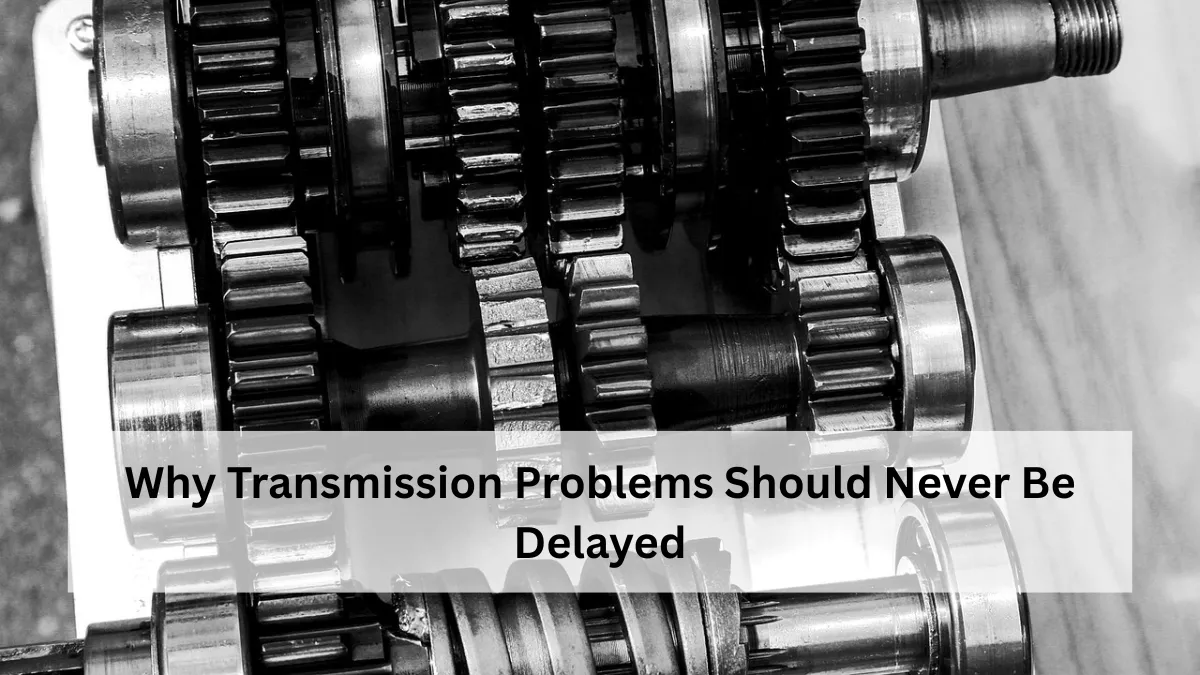
A transmission transfers power from the engine to the wheels. It uses gears, clutches, sensors, and fluid to shift smoothly at the right time.
When any part of this system is off, the entire system is affected.
Heat is one of the biggest enemies. Transmission fluid cools and lubricates moving parts. When fluid breaks down or gets low, friction increases. Friction creates more heat. Heat damages seals, warps metal parts, and burns clutch material.
Contamination is another common cause. Over time, metal shavings and debris from normal wear circulate in the fluid. If the fluid is not changed on schedule, those particles act like sandpaper inside the transmission.
Electronic problems can also trigger mechanical damage. Modern transmissions rely on sensors and control modules. A faulty sensor can cause incorrect shifting, which puts stress on gears and clutches.
Small problems usually come first. A slipping gear. A rough shift. A warning light. These are early signs that something is not working correctly. When ignored, those small issues multiply.
What Happens When You Delay Transmission Repairs
Delaying transmission problems rarely saves money. It almost always increases the final repair cost.
A minor fluid leak can drain the system and cause overheating. Overheating can destroy internal seals. Once seals fail, pressure drops. Low pressure causes slipping. Slipping burns clutch plates. Burned clutches release debris into the fluid. That debris damages valves and solenoids. At that point, the entire transmission may need rebuilding or replacement.
What could have been a simple fluid service or seal replacement becomes a major mechanical repair.
There is also a safety risk. A failing transmission can lose power while merging onto a highway or stall at an intersection. Sudden loss of movement puts you and others at risk, especially in high-traffic areas.
In cold or hot climates common across the U.S., temperature stress adds another layer of risk. Heat accelerates fluid breakdown in summer. Thickened fluid can cause delayed shifting in winter. Both conditions make an already weak transmission worse.
Step-by-Step: What To Do When You Notice a Transmission Issue
Step One: Pay Attention to Early Warning Signs
Transmission problems usually give warnings before they become serious.
You may notice delayed engagement when shifting from park to drive. You may feel slipping when accelerating. You may hear whining, grinding, or clunking sounds. You may smell something burnt after driving. You may see a warning light on the dashboard.
These signs are not random. They are signals that something is off.
Ignoring them does not make them go away. It only gives the problem more time to spread.
Step Two: Check the Transmission Fluid
Many vehicles still allow drivers to check transmission fluid with a dipstick. If your car has one, check it when the engine is warm and the car is on level ground.
Healthy fluid is usually red or light brown and smells neutral or slightly sweet. Dark, brown, or black fluid with a burnt smell is a warning sign.
Low fluid levels suggest a leak. Leaks often start small at seals, gaskets, or cooler lines. Fixing a leak early is far cheaper than fixing the damage caused by running low on fluid.
If your vehicle does not have a dipstick, that does not mean the fluid is “lifetime.” It still degrades and still needs service based on manufacturer guidelines.
Step Three: Reduce Stress on the Vehicle
Until the issue is inspected, drive gently.
Avoid hard acceleration. Avoid towing. Avoid stop-and-go traffic when possible. Avoid long highway trips that generate heat.
This does not fix the problem, but it slows down damage and buys you time to get proper help.
Step Four: Get a Professional Inspection
A qualified mechanic can scan for transmission codes, measure fluid pressure, and inspect for leaks or abnormal wear.
Early inspections often reveal simple causes like low fluid, dirty fluid, or a failing sensor. These can usually be corrected without major repairs.
Waiting until the transmission fails completely removes those options.
Step Five: Follow Through on Recommended Maintenance
If the issue is maintenance-related, such as overdue fluid service, follow through promptly.
Transmission fluid changes, filter replacements, and software updates are preventative steps. They restore proper operation and slow future wear.
Skipping maintenance is one of the most common reasons transmissions fail prematurely.
Realistic Example From Everyday Driving
Consider a commuter in Phoenix who notices slight slipping during summer heat. The fluid is dark but the car still drives. The driver waits three months.
By the time the vehicle is inspected, the fluid is burned, clutch material is worn, and metal debris is circulating through the system. The transmission needs a rebuild.
If the fluid had been serviced when slipping first appeared, the internal damage might not have happened.
Now consider a retiree in Ohio who feels a hard shift in winter. The issue turns out to be a failing sensor sending incorrect data to the control module. A simple sensor replacement fixes the problem.
If the retiree had waited until spring, repeated harsh shifts could have damaged internal components.
The difference between these outcomes is timing.
Common Mistakes That Make Transmission Problems Worse
One common mistake is assuming the problem is “normal for an old car.” Age does increase wear, but abnormal behavior is not something to ignore.
Another mistake is using additives without diagnosis. Some additives may temporarily mask symptoms but do not fix underlying problems. In some cases, they worsen seal damage or fluid breakdown.
Another mistake is continuing to tow, haul heavy loads, or drive aggressively after symptoms appear. This adds stress to already struggling components.
Some drivers also believe that if there is no warning light, nothing is wrong. Many transmission issues do not trigger a light until damage is advanced.
Finally, some drivers delay because the car still moves. Transmission damage is not always immediately disabling. It is progressive.
Why Early Action Protects Both Safety and Budget
Early action does not guarantee that repairs will be cheap, but it dramatically improves the chances.
Replacing fluid is far cheaper than replacing clutches. Replacing a sensor is far cheaper than rebuilding a valve body. Fixing a seal is far cheaper than replacing the entire transmission.
From a safety perspective, early action reduces the risk of sudden loss of power, stalling, or unpredictable shifting.
From a reliability perspective, it extends the usable life of the vehicle.
From a financial perspective, it helps avoid sudden large repair bills that disrupt budgets and plans.
Conclusion: Timing Is the Most Important Factor
Transmission problems are not emergencies the moment they appear, but they are time-sensitive.
Small issues grow into large ones because of heat, friction, and contamination. Delaying repairs rarely saves money and often creates safety risks.
Paying attention to early signs, checking fluid, reducing driving stress, and getting a professional inspection are practical steps any driver can take.
You do not need to be a mechanic to protect your transmission. You only need to respect the warnings your vehicle gives you and respond before damage spreads.
In the long run, the most reliable way to keep a car running smoothly is not waiting until it stops working. It is acting while it still does.
FAQ
How long can I drive with a slipping transmission?
There is no safe time limit. Slipping indicates that internal components are not holding properly. Continued driving increases heat and wear. Even short trips can worsen damage.
Is it safe to drive if the transmission warning light comes on?
A warning light means the system has detected a fault. Some faults are minor, but some indicate serious issues. Driving without knowing the cause carries risk.
Can a transmission problem fix itself?
Transmission problems do not resolve on their own. Symptoms may come and go temporarily, but the underlying cause usually remains and continues to develop.
Is a transmission flush always a good idea?
A flush can help when fluid is dirty but the transmission is still healthy. In severely damaged transmissions, a flush may worsen slipping by removing friction material that was helping clutches hold. That is why diagnosis matters before service.
✨ You May Also Like ✨