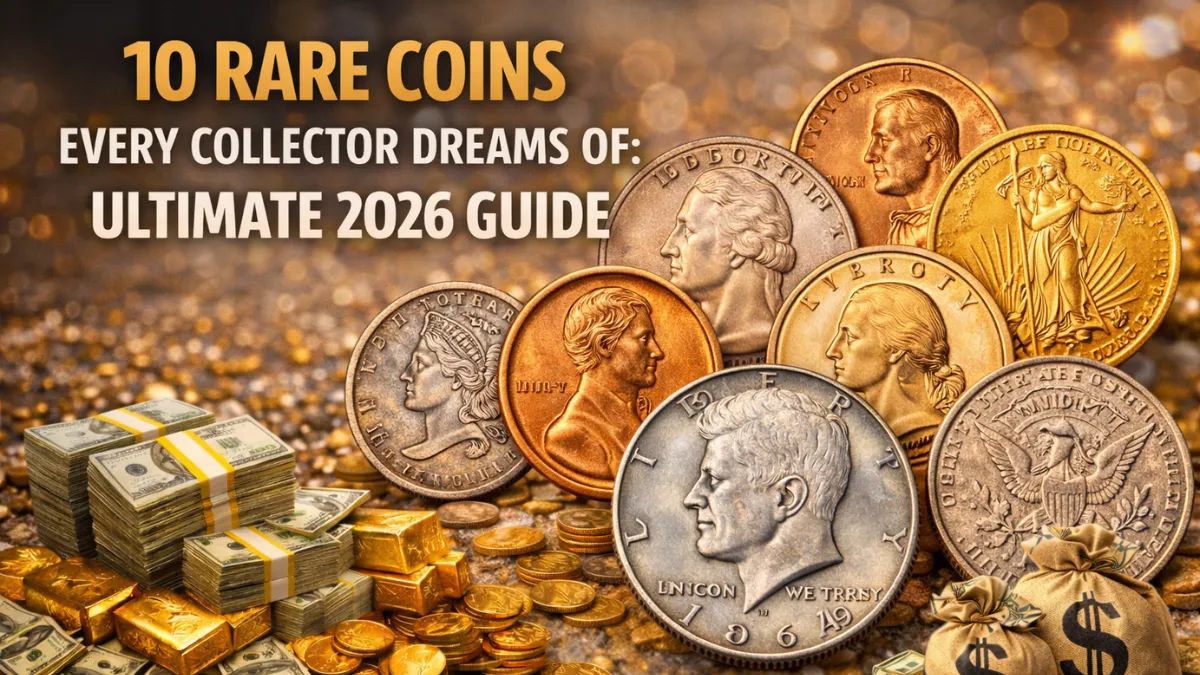
This 2026 guide features ten rare coins that remain dream targets for collectors around the world. Each coin listed below includes a short explanation of why it is rare, what details to check before buying, and a realistic idea of its market value. While prices can change depending on condition and demand, these coins continue to stand out because of their history, low survival numbers, and strong collector interest. Whether you are an experienced numismatist or a growing enthusiast, understanding these legendary coins can help you make informed decisions and set clear collecting goals for the future.
How to Read This 2026 Guide to Rare Coins
Use the short coin profiles in this guide to decide which coins fit your budget and long-term plans. Every entry explains the key rarity factors, what to examine before purchasing, and the general price range seen at auctions. Some coins are museum-level treasures worth millions, while others may be slightly more accessible but still rare. Always compare condition, certification, and documented history before making a major purchase. This guide is designed to simplify complex information so you can focus on quality, authenticity, and smart buying decisions.
Top 10 Rare Coins Every Collector Dreams Of
1. 1933 Saint-Gaudens Double Eagle
This famous gold coin was never officially released for circulation, which makes legal examples extremely rare. Ownership history plays a major role in value. Buyers should carefully check provenance papers and trusted certification. Authenticated pieces have sold for many millions of dollars at major auctions.
2. 1787 Brasher Doubloon
Created by goldsmith Ephraim Brasher, this early American gold coin predates the official U.S. Mint. Variations exist depending on the punch mark and weight. Original surfaces and expert authentication are essential. Auction prices usually reach into the millions.
3. 1794 Flowing Hair Silver Dollar
Known as the first silver dollar struck by the United States, this coin is highly respected by collectors. Very few high-quality examples survive. Strike sharpness, edge lettering, and clear documentation strongly affect value. Top specimens have sold for several million dollars.
4. 1804 Dollar Class I
Although dated 1804, most were produced later as presentation pieces. Only a small number of Class I coins exist. Classification and proper documentation are critical before buying. Prime examples regularly sell for over one million dollars.
5. 1913 Liberty Head Nickel
Only five confirmed examples of this nickel are known. Its mysterious history makes it extremely desirable. Surface quality and proven ownership history are important. Auction prices often reach multiple millions.
6. 1870-S Seated Liberty Dollar
This rare proof dollar from San Francisco has very limited surviving examples. Original reflective proof surfaces increase value. Cleaning marks or damage can greatly reduce price. High-end pieces may sell in the six- to seven-figure range.
7. Edward III Florin
This medieval English gold coin, sometimes called the Double Leopard, is extremely rare. Clear inscriptions and minimal corrosion are key. Because of its age and history, prices often reach six figures or more depending on condition.
8. 1797 Dr. William Mason Pattern Coin
Pattern coins were trial designs made in very small numbers. Some are unique pieces. Buyers should rely on specialist research and detailed comparisons with reference works. Confirmed unique examples can command six-figure prices or higher.
9. 2007-P Saint-Gaudens Double Eagle
Modern mint errors tied to this design can attract strong collector attention. Official documentation and third-party certification are essential. Depending on rarity and condition, values can range from tens of thousands to six figures.
10. 1822 Half Eagle
Early nineteenth-century U.S. gold coins with proof or special striking status are scarce. Strike quality and originality determine most of the value. Rare confirmed examples often sell from high five figures into the millions.
Summary Table of Key Value Factors
| Coin | Main Rarity Factor | Typical Value Range |
|---|---|---|
| 1933 Double Eagle | Legal status & low survival | Multi-millions |
| Brasher Doubloon | Early private minting | Millions |
| 1794 Silver Dollar | First US dollar | Hundreds of thousands to millions |
| 1804 Dollar | Limited Class I pieces | Over $1 million |
| 1913 Liberty Nickel | Only five known | Millions |
| 1870-S Dollar | Rare proof issue | Six to seven figures |
| Edward III Florin | Medieval rarity | Six figures+ |
| 1797 Pattern | Unique trial strike | Six figures+ |
| 2007-P Error | Modern rare error | Five to six figures |
| 1822 Half Eagle | Early gold scarcity | High five to seven figures |
How to Verify Rare Coins Before Buying
Always check certification from trusted grading companies like Professional Coin Grading Service and Numismatic Guaranty Company. Read the full grading report carefully. Ask for auction history and ownership records because strong provenance increases value and security. For expensive coins, consult more than one expert. Independent opinions reduce risk and confirm authenticity before large investments.
Where to Buy and Store Rare Coins
Purchase rare coins through respected auction houses, established dealers, or insured private transactions. Avoid unverified online listings when dealing with high-value pieces. Once purchased, store coins in climate-controlled environments and use safe, non-PVC holders. Insurance coverage is strongly recommended. Proper storage protects surfaces and helps maintain long-term value.
Real-World Example: A Major Purchase
In 2021, a private collector purchased a legally owned 1933 Saint-Gaudens Double Eagle after multiple certifications confirmed authenticity and ownership history. The buyer paid over eighteen million dollars at auction, largely due to the coin’s rarity and legal background. This example shows how careful research, expert verification, and patience are necessary when making high-value purchases. Major acquisitions should never be rushed.
Final Tips for Collectors in 2026
Focus on confirmed rarity and verified authenticity instead of chasing headlines. Build relationships with trusted dealers and auction houses to access better opportunities. Start with coins that fit your current budget and gradually move toward elite rarities as your knowledge grows. Careful study, patience, and professional guidance can protect your investment while making coin collecting both rewarding and enjoyable.
✨ You May Also Like ✨