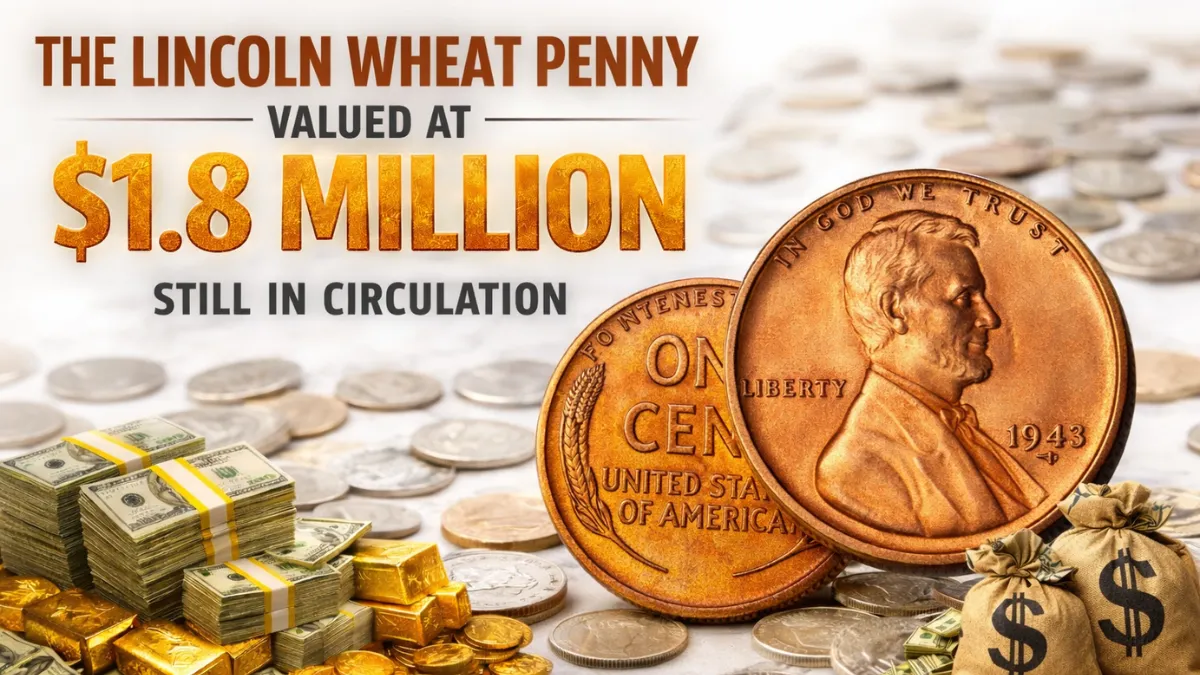
Stories about a Lincoln Wheat Penny worth $1.8 million often grab attention and spark excitement among collectors and everyday people. While most wheat pennies are only worth a few cents, a small number of rare examples have sold for very high prices at auction. These rare coins can sometimes remain in circulation because many people do not notice the small details that make them special. This guide explains how a valuable wheat penny could still be found in pocket change and provides simple steps to help you identify, protect, and authenticate a potentially rare coin before making any decisions about selling it.
Why the $1.8 Million Lincoln Wheat Penny Matters
The Lincoln Wheat Penny was produced from 1909 to 1958 and features Abraham Lincoln on the front and two wheat stalks on the back. Because billions were minted, most are common today. However, certain years, mint marks, and rare metal errors make a few examples extremely valuable. High-value coins sometimes stay in circulation because people overlook small differences in design, date, or metal type. Learning what to check can prevent you from accidentally spending a rare coin. Understanding these details also helps you act quickly and carefully if you discover something unusual in your change.
How to Identify a Potential $1.8 Million Wheat Penny
There is no single appearance that guarantees a penny is worth $1.8 million, but some features increase the chances. First, check the date and mint mark carefully. Certain rare years or unusual mint mark placements can be important. Next, consider the metal composition. For example, some wartime pennies were made from steel, so a copper version from the same year could be extremely rare. Look for doubling in letters or numbers, which may indicate a valuable die error. Finally, examine the overall condition. Coins with sharp details, no heavy wear, and strong original shine are generally worth more than worn examples.
Simple Inspection Steps
Inspect the coin slowly under bright light and use a small magnifying glass for better detail. Compare what you see with clear reference photos from trusted coin guides. Pay attention to color, weight, and any unusual marks. If the coin feels lighter or heavier than normal, that could signal a metal error. Never clean the coin, even if it looks dirty. Cleaning can remove natural surface tone and reduce collector value. If you notice something uncommon, treat the coin as potentially valuable and handle it carefully until you receive expert advice.
What to Do If You Think You Found One
If you suspect your wheat penny is rare, avoid rushing. Hold the coin only by its edges to prevent fingerprints. Store it in a soft coin flip or small holder for protection. Take clear photos of both sides and write down where you found it. Weigh the coin using a precise scale, since small differences in weight can reveal rare errors. Contact a respected coin dealer or a professional grading company such as Professional Coin Grading Service, Numismatic Guaranty Company, or ANACS for authentication.
What Experts Will Examine
| Feature Checked | Why It Is Important |
|---|---|
| Metal composition | Confirms if coin was struck on rare material |
| Exact weight | Detects wrong planchet errors |
| Die markers | Matches known rare varieties |
| Surface condition | Determines official grade |
| Authenticity | Rules out counterfeits |
Professionals use special tools and testing methods to confirm if a coin is genuine and rare.
Where to Get an Accurate Valuation and Sell
After authentication, you can explore selling options through trusted channels. Third-party grading gives buyers confidence and often increases the final price. Major auction houses like Heritage Auctions and Stack’s Bowers Galleries regularly handle high-value coins. You may also begin with a reputable local coin dealer or a numismatic club for an initial opinion. Many rare coins are sold through auction because competitive bidding can raise the final sale price. Clear grading reports and professional photographs help attract serious collectors and ensure transparency.
Practical and Legal Considerations
In most cases, owning a rare penny does not require special legal steps. However, honesty and clear ownership are important during a sale. If you found the coin in property that does not belong to you, seek legal advice about your rights before selling it. Insurance is highly recommended for valuable coins. When shipping a coin for grading or sale, use insured and trackable services to prevent loss. Keep all documents, grading certificates, and communication records. Proper paperwork increases buyer trust and protects you financially.
Case Study: A Realistic Discovery Example
A small business owner was sorting through loose change and noticed a wheat penny with a slightly unusual color and mint mark. Instead of ignoring it, they stopped handling the coin and placed it safely aside. After photographing it clearly, they visited a local coin dealer who suggested professional grading. The coin was sent for authentication and confirmed as a rare variety. Once graded and sealed, it was offered at auction and sold for a strong price compared to its one-cent face value. This example shows that careful steps, patience, and expert evaluation can turn an ordinary-looking coin into a meaningful financial opportunity.
Quick Checklist for a Suspected Rare Wheat Penny
Do not clean the coin under any circumstances.
Handle it only by the edges and store it safely.
Take sharp photos of both sides.
Weigh and measure it accurately.
Seek professional authentication before attempting to sell.
Use insured shipping and trusted auction services if listing it for sale.
Final Thoughts
Finding a Lincoln Wheat Penny that could be worth $1.8 million is rare but not impossible. Most wheat pennies in circulation are common, yet a few valuable examples still appear in pocket change. The key is knowing what to look for and taking careful steps to protect the coin. Avoid cleaning, document everything, and rely on professional grading services for confirmation. With patience and proper handling, you can protect the value of your discovery and make informed decisions about selling or keeping it as part of a collection.
✨ You May Also Like ✨