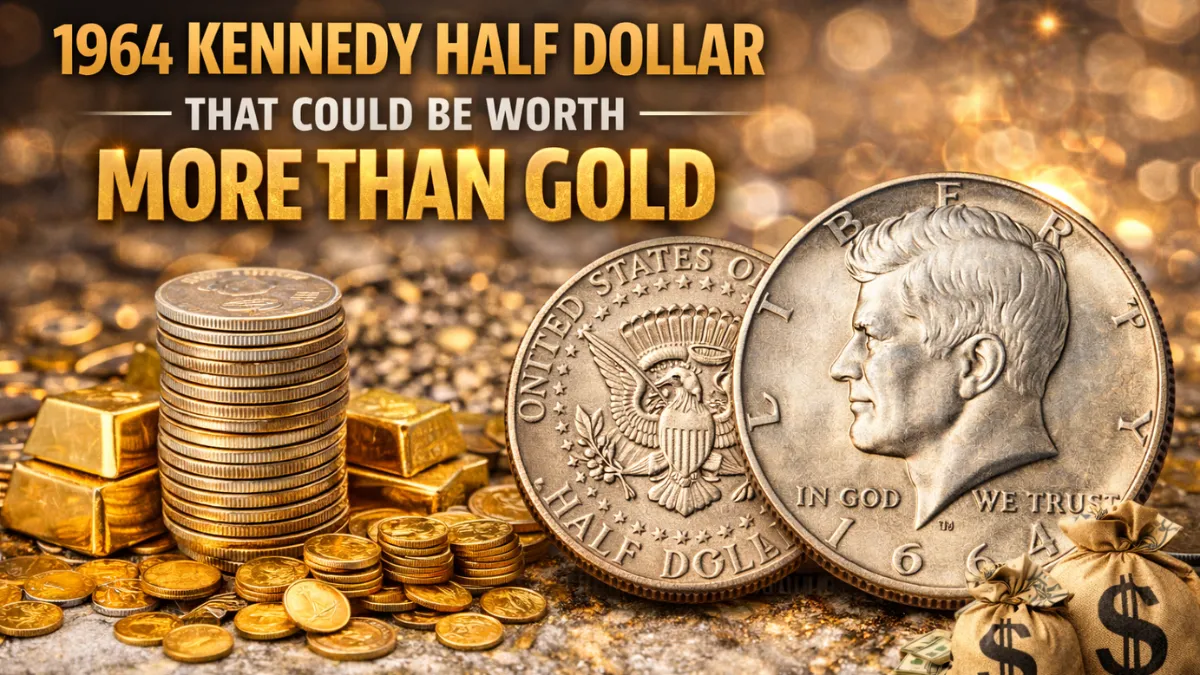
The 1964 Kennedy Half Dollar is one of the most talked-about modern U.S. coins. Many people keep it only for its silver value, but some examples can sell for much more than their metal content.
In rare situations, certain high-grade or special versions have reached prices that exceed the value of the same weight in gold. This makes the coin interesting not only to collectors but also to everyday people who may have one stored away. Understanding why this coin matters, how its value is calculated, and what features increase its worth can help you decide whether your half dollar is simply silver bullion or a true collector’s treasure.
Why the 1964 Kennedy Half Dollar Matters
The 1964 Kennedy Half Dollar was the first year this design was released after President John F. Kennedy’s assassination. It is also the last regular U.S. half dollar made with 90% silver for circulation. This combination of history and silver content makes it highly collectible.
While millions were produced, collectors closely watch coins in exceptional condition or with special features. Many people assume the coin’s value depends only on silver prices, but rarity, condition, and collector demand can raise its price much higher than melt value.
Silver Content and Melt Value
The 1964 half dollar contains about 0.36169 troy ounces of silver. This silver content creates a base melt value that changes with the current silver market price. When silver prices increase, the melt value rises as well. However, melt value is only the starting point.
A coin in outstanding condition or with rare features can sell for much more than its silver content alone. In certain market conditions, a highly graded example may even sell for more than the value of an equal weight of gold because collectors are willing to pay a premium for rarity and quality.
What Affects Melt Value vs. Collector Value
| Factor | Impact on Value |
|---|---|
| Silver spot price | Sets basic melt value |
| Coin grade | Higher grades increase price |
| Mint mark | Certain mints may be preferred |
| Errors or varieties | Rare features add premium |
| Collector demand | Strong demand raises auction prices |
Collector value depends on more than just metal content, especially for certified high-grade coins.
Which 1964 Kennedy Halves Can Be Worth More Than Gold
Not every 1964 half dollar will reach a high price. Usually, coins that sell for exceptional amounts are proof coins, high-grade uncirculated business strikes, or pieces with rare mint errors. Examples graded MS65 or higher are especially desirable.
Proof coins with deep cameo contrast, often labeled PR67+ DCAM, can also command strong premiums. Error coins such as doubled dies or striking mistakes may add additional value. Certification from respected grading services increases buyer trust and often pushes the final sale price higher at auction.
Signs of a Valuable Coin
Look closely at the details of Kennedy’s hair and cheek, since sharp features usually indicate little wear. A strong strike with bright original luster is another positive sign. The coin should have minimal contact marks and clean surfaces. Certification from trusted grading companies such as Professional Coin Grading Service or Numismatic Guaranty Company adds credibility.
Coins sealed in official holders with high grades are easier to sell and often attract serious collectors willing to pay premium prices.
How to Identify a Valuable 1964 Kennedy Half Dollar
Start by checking the coin carefully under good lighting. Examine both sides for scratches, dull spots, or signs of circulation. Inspect the edge for damage and clear reeding lines. Look for the mint mark on the reverse below the eagle; no mint mark means it was struck in Philadelphia, while a “D” indicates Denver.
Compare your coin with reliable reference images to spot unusual varieties or errors. If your coin appears nearly flawless or has proof-like surfaces, it may be worth submitting for professional grading.
When to Get the Coin Graded
If your coin looks uncirculated with strong shine and no visible wear, grading can significantly increase its market value. Professional grading confirms authenticity and assigns a condition score, which helps buyers feel confident. High-grade coins, especially MS65 or higher, often perform better at auction than raw coins. Grading also protects the coin inside a sealed holder.
For proof coins graded PR65 and above, certification can make a noticeable difference in selling price and overall demand among collectors.
Selling or Appraising Your Coin
If you believe you own a valuable example, begin with research and compare recent auction results. Consider visiting reputable coin dealers or local coin clubs for opinions. Professional grading services like Professional Coin Grading Service and Numismatic Guaranty Company can authenticate and grade your coin. Auction houses that specialize in coins may help you reach serious buyers.
Before selling, get at least two independent appraisals and understand any fees involved. Proper documentation and clear photographs improve buyer confidence and final sale value.
Small Real-World Example
A collector once purchased a roll of mixed half dollars at a garage sale and found a bright 1964 Kennedy Half in uncirculated condition. The coin was sent to a grading service and received an MS66 grade. Once certified, it attracted multiple bidders at auction and sold for several thousand dollars, far above its silver melt value.
This example shows how condition and official grading can dramatically change the price of a coin. While not every coin will reach such heights, quality and certification can make a major difference.
Final Checklist: Could Yours Be Worth More Than Gold?
Is the coin uncirculated with strong original luster?
Does it have a certified grade of MS65 or higher?
Is it a proof coin with deep cameo contrast?
Are there any rare errors or unusual features?
Have you checked recent auction results for similar examples?
If you answered yes to several of these questions, professional grading and expert advice may be worthwhile. With the right combination of condition, rarity, and demand, a 1964 Kennedy Half Dollar can sell for far more than its metal value and, in rare cases, even exceed the worth of an equal weight of gold.
✨ You May Also Like ✨