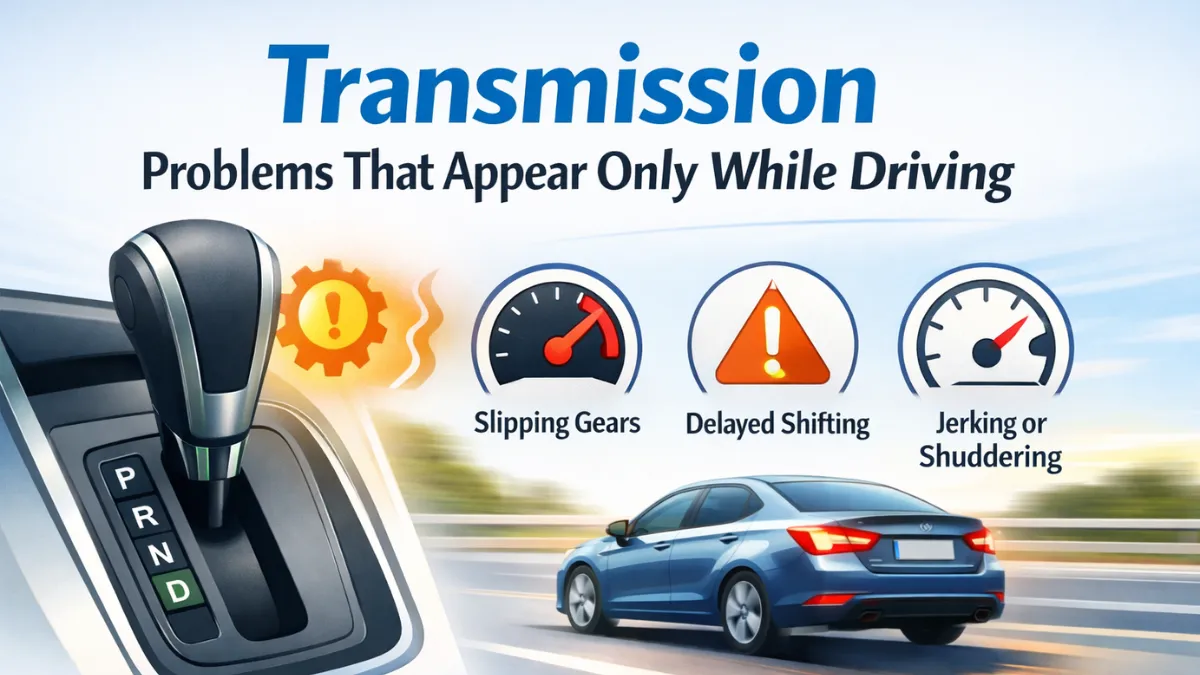
Some transmission problems don’t show up when your car is parked, idling, or even during a quick test in your driveway. Everything may feel normal until you start driving. Then you notice delayed shifting, slipping gears, strange noises, or a sudden loss of power. These issues can be confusing and stressful, especially if the car seems fine at low speeds or short distances.
For many drivers in the United States, this situation leads to uncertainty. You may wonder whether it is safe to keep driving or if the problem is serious enough to require immediate attention. This article explains why certain transmission problems appear only while driving, what causes them, and how to approach solutions step by step. The goal is to help everyday drivers understand what is happening in plain language and make informed decisions.
Why Transmission Problems Can Appear Only While Driving
The Transmission Works Harder Under Load
A transmission behaves very differently when a vehicle is moving compared to when it is sitting still. While driving, the system must manage engine power, vehicle speed, road conditions, and driver input all at once. Heat builds up, internal pressure changes, and components move at high speed. Problems that remain hidden at idle often show up only when these demands increase.
Heat and Fluid Pressure Play a Big Role
Transmission fluid circulates more aggressively while driving. As the fluid heats up, its thickness changes. If the fluid level is low or the fluid is worn out, it may fail to provide proper pressure once the transmission is hot. This can cause slipping, hesitation, or rough shifting that does not occur when the vehicle is cold or stationary.
Sensors and Electronics Activate in Motion
Modern vehicles rely heavily on sensors and electronic controls. Some sensors only send signals when the car reaches certain speeds or shift points. A failing sensor may not trigger a warning light right away, but it can cause shifting problems while driving, especially during acceleration or highway speeds.
Common Transmission Problems That Show Up While Driving
Delayed or Hesitant Shifting
You may press the accelerator and feel the engine rev higher than normal before the transmission shifts. This delay often appears during city driving or when merging onto a highway. It usually does not happen while parked or at idle because the transmission is not required to change gears under load.
Slipping Gears at Steady Speeds
Gear slipping can feel like a sudden loss of power, followed by a jolt when the gear re-engages. This often happens at consistent speeds, such as cruising on the freeway. The transmission may struggle to maintain pressure in the selected gear once it warms up.
Shuddering or Vibrations During Acceleration
Some drivers notice a shuddering sensation when accelerating from a stop or climbing a hill. This can feel like driving over rough pavement even though the road is smooth. These vibrations typically appear only when torque demand increases.
Strange Noises That Start While Moving
Whining, humming, or grinding noises that begin once the car is moving can point to internal transmission wear. These sounds often disappear when the vehicle stops or shifts into neutral.
Warning Lights That Come and Go
In some cases, a warning light appears only after driving for several minutes and then turns off when the vehicle is restarted. This behavior suggests a problem that develops as the transmission reaches operating temperature.
Step-by-Step Approach to Identifying the Cause
Step One: Pay Attention to When the Problem Occurs
Start by noticing exactly when the issue appears. Think about speed, road conditions, and how long you have been driving. Problems that occur only after twenty or thirty minutes often relate to heat or fluid condition. Issues that show up during uphill driving or towing may involve pressure or internal wear.
Step Two: Check Transmission Fluid Correctly
Transmission fluid should be checked according to your vehicle’s owner’s manual. Some vehicles require the engine to be running, while others do not. The fluid should be at the proper level and have a clean, reddish color. Dark, burnt-smelling fluid suggests overheating or internal damage that becomes noticeable while driving.
Step Three: Observe How the Car Shifts When Cold Versus Warm
Many transmission issues feel mild when the car is cold but worsen as it warms up. Take note of whether shifting problems increase after longer drives. This pattern often points to worn seals, degraded fluid, or internal clutch issues.
Step Four: Notice Any Changes in Fuel Efficiency or Performance
A transmission that is not shifting properly can cause higher engine speeds and reduced fuel economy. If you notice these changes only while driving longer distances, it supports the idea that the problem develops under sustained use.
Practical Solutions Based on Common Causes
Worn or Low Transmission Fluid
Old or low fluid cannot maintain proper pressure when hot. In many cases, a fluid service can improve shifting behavior. This process involves draining old fluid and replacing it with fluid that meets the manufacturer’s specifications. While this is not a guaranteed fix, it often helps with problems that appear only after driving.
Overheating Transmission
Heat is one of the most common causes of driving-only transmission issues. Overheating can be caused by heavy traffic, towing, or clogged cooling lines. Allowing the vehicle to cool down and avoiding heavy loads may reduce symptoms temporarily. Long-term solutions involve inspecting the cooling system and ensuring fluid circulation is working correctly.
Faulty Sensors or Solenoids
Electronic components control gear changes in modern transmissions. A failing sensor may send incorrect data only at certain speeds. Diagnostic testing can identify these issues. Replacing a faulty sensor or solenoid often resolves inconsistent shifting while driving.
Internal Wear That Shows Under Load
Clutches, bands, and gears wear over time. These parts may hold at idle but slip under driving conditions. When this happens, professional inspection is usually required. Early detection can sometimes prevent more extensive damage.
Helpful Driving Tips to Reduce Symptoms
Driving habits can influence how noticeable transmission problems feel. Smooth acceleration reduces stress on internal components. Allowing the vehicle to warm up before aggressive driving can help fluid circulate properly. Avoiding sudden gear changes and heavy loads may reduce symptoms until the issue is addressed.
It is also important not to ignore early warning signs. Continuing to drive with slipping or overheating can lead to more severe damage, even if the problem seems minor at first.
Common Mistakes Drivers Make
Many drivers assume that if a car shifts fine when parked or during short trips, the transmission must be healthy. This belief often delays proper diagnosis. Another common mistake is ignoring fluid condition because there is no visible leak. Transmission fluid can degrade internally without obvious signs.
Some drivers also rely solely on dashboard warning lights. Not all transmission issues trigger immediate alerts, especially if the problem occurs only under specific driving conditions.
When Professional Inspection Becomes Necessary
If problems continue despite basic checks, a professional inspection is often the safest step. Technicians can test pressure, temperature, and electronic signals while the vehicle is in motion. This type of evaluation is especially important for problems that cannot be reproduced while the car is stationary.
Conclusion: Understanding the Signs Makes a Difference
Transmission problems that appear only while driving are often tied to heat, fluid condition, and internal pressure. Because these issues do not show up at idle, they are easy to overlook. Paying attention to when symptoms occur, how they change over time, and how the vehicle behaves under different driving conditions can provide valuable clues.
By understanding the reasons behind these problems and following a step-by-step approach, drivers can respond more confidently and avoid unnecessary stress. Early awareness and informed action often make a meaningful difference in maintaining vehicle reliability and safety on the road.
FAQ’s
Why does my transmission slip only on the highway?
Highway driving places steady demand on the transmission and generates heat over time. Slipping at these speeds often relates to fluid breakdown or internal wear that becomes noticeable only after the transmission warms up.
Can transmission problems disappear after restarting the car?
Yes, restarting can temporarily reset electronic controls or allow components to cool. However, if the issue returns after driving, the underlying problem still exists and should be checked.
Is it safe to keep driving if the problem only happens sometimes?
Occasional symptoms can still indicate developing damage. Driving short distances may seem fine, but continued use without inspection can worsen the condition over time.
Why does my car shift fine in the morning but poorly later?
Cold fluid is thicker and may temporarily compensate for worn parts. As the fluid heats up and thins, shifting problems become more noticeable.
✨ You May Also Like ✨