For many drivers in the United States, transmission failure feels sudden and expensive. One day the car seems fine, and the next day it struggles to move, shudders on the highway, or refuses to shift gears. In reality, most transmissions give clear warning signs long before they break. These signs are often subtle and easy to ignore, especially if you are busy, new to car ownership, or not familiar with how a healthy transmission should feel.
This article explains what your car may be telling you before the transmission fails. You will learn why these problems happen, how to recognize early symptoms, and what practical steps you can take to reduce damage. The goal is not to make you a mechanic, but to help you understand your car well enough to act early and avoid unnecessary stress.
Why Transmission Problems Develop Over Time
A transmission is one of the hardest-working systems in your vehicle. Every time you accelerate, slow down, or change speed, it manages power from the engine to the wheels. Over thousands of miles, heat, friction, and fluid breakdown slowly take their toll.
Most transmission problems begin with heat and fluid issues. Transmission fluid is responsible for lubrication, cooling, and pressure control. When fluid levels drop or the fluid becomes dirty or burnt, internal parts no longer move smoothly. Gears begin to slip, seals harden, and metal surfaces wear faster than they should.
Driving habits also play a role. Stop-and-go traffic, towing heavy loads, aggressive acceleration, and long highway drives in hot weather all increase transmission strain. Over time, small issues grow into larger ones if they are not addressed.
Delayed or Rough Gear Shifting
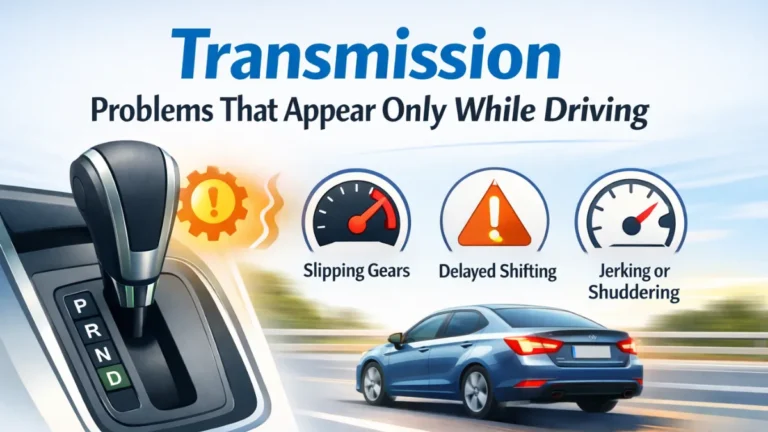
One of the earliest warning signs is delayed shifting. You may press the gas pedal and notice the car hesitates before moving into the next gear. In some cases, the shift feels rough or jerky instead of smooth.
This usually happens when transmission fluid pressure is not correct. Low or degraded fluid cannot build pressure fast enough to engage gears properly. Internal valves may also stick due to debris or varnish buildup.
If you notice this behavior, the first step is to pay attention to when it occurs. Does it happen more when the car is cold, after long drives, or during uphill driving? These details matter when diagnosing the issue. Checking the transmission fluid level and condition, if your vehicle allows it, can provide early clues. Fluid that is dark or smells burnt is a sign that service may be needed.
Slipping Gears While Driving
Gear slipping is another clear message from your car. This happens when the transmission unexpectedly changes gears or struggles to stay in gear while driving at a steady speed. You may feel a sudden surge in engine RPMs without an increase in speed.
Slipping often points to worn internal components or low fluid levels. As clutches and bands wear down, they lose the ability to hold gears firmly. Heat and friction accelerate this process, especially in older vehicles or those used for frequent short trips.
When slipping begins, driving gently can help reduce further damage. Avoid rapid acceleration and heavy loads. Scheduling a professional inspection sooner rather than later can make a significant difference in repair options.
Unusual Noises That Should Not Be Ignored
A healthy transmission operates quietly. Grinding, whining, humming, or clunking noises are not normal and should not be dismissed as “just an old car sound.”
Whining noises often relate to fluid problems or worn bearings. Grinding may indicate metal-to-metal contact inside the transmission. Clunking sounds during gear changes can be linked to worn mounts or internal damage.
Listening carefully to when the noise occurs is important. Sounds during acceleration, deceleration, or shifting provide different clues. Reducing driving until the cause is identified can prevent minor wear from becoming a major failure.
Burning Smell Coming From the Vehicle
A burning smell is one of the most urgent signs. Transmission fluid that overheats produces a sharp, burnt odor that may enter the cabin or linger around the car after driving.
Overheating usually occurs when fluid levels are low, fluid quality is poor, or the transmission is under excessive load. Driving in hot weather, towing, or sitting in traffic for long periods can worsen the situation.
If you notice a burning smell, it is best to stop driving once it is safe to do so. Continuing to drive an overheating transmission can cause seals to fail and internal parts to warp. Allowing the vehicle to cool and having it inspected promptly can prevent more severe damage.
Fluid Leaks Under the Car
Transmission fluid leaks often show up as red or dark brown spots under the vehicle. These leaks may be slow at first, making them easy to overlook.
Leaks typically come from worn seals, loose pan bolts, or damaged lines. Even small leaks can lead to serious problems over time because the transmission depends on precise fluid levels to function correctly.
Checking your parking spot or driveway regularly can help catch leaks early. If fluid loss is suspected, avoiding long drives and addressing the issue quickly can protect internal components.
Warning Lights and Dashboard Messages
Modern vehicles are equipped with sensors that monitor transmission performance. When something is off, a warning light may appear on the dashboard. This could be a general warning light or a specific transmission-related message.
These lights do not always mean immediate failure, but they do indicate that the system has detected abnormal behavior. Ignoring warning lights can allow small problems to escalate.
If a warning light appears, noting when it turns on and whether it stays on or comes and goes is helpful. A diagnostic scan can identify error codes that point to the underlying issue.
Step-by-Step: How to Respond When You Notice Early Signs
The first step is observation. Pay attention to how your car feels, sounds, and smells during everyday driving. Small changes often appear gradually.
The second step is reducing strain. Driving smoothly, avoiding heavy loads, and limiting stop-and-go conditions can slow the progression of damage.
The third step involves checking what you can safely check. If your vehicle allows fluid inspection, review the level and color. Follow the owner’s manual carefully.
The fourth step is seeking professional evaluation. Sharing detailed observations with a qualified technician helps them identify issues faster and more accurately.
The final step is following recommended maintenance or repairs promptly. Early service often costs less and preserves the lifespan of the transmission.
Common Driving Habits That Make Problems Worse
Many drivers unknowingly stress their transmissions through daily habits. Rapid acceleration, frequent hard braking, and shifting from reverse to drive without stopping fully increase internal strain.
Driving with low fluid levels or ignoring small leaks also accelerates wear. In colder climates, aggressive driving before the vehicle warms up can thicken fluid and reduce lubrication.
Being mindful of these habits and making small adjustments can significantly improve transmission health over time.
Mistakes Drivers Often Make When Symptoms Appear
One common mistake is assuming symptoms will go away on their own. Transmission problems rarely fix themselves.
Another mistake is relying on temporary solutions without understanding the cause. Masking symptoms may delay repairs but often leads to more damage later.
Waiting too long to seek help is also common, especially when the car still moves. Early action provides more options and less stress.
FAQ’s
Can a transmission fail suddenly without warning?
Most transmissions show warning signs before failing. These signs may be subtle at first, such as delayed shifting or unusual noises. Sudden failure usually occurs after warnings have been overlooked.
Is it safe to drive with mild transmission symptoms?
Driving with mild symptoms may be possible for a short time, but it increases the risk of further damage. Reducing driving and addressing the issue early is the safer approach.
How often should transmission fluid be checked?
This depends on the vehicle. Some transmissions are sealed, while others require regular checks. The owner’s manual provides guidance specific to your car.
Do cold temperatures affect transmission behavior?
Yes, cold temperatures can thicken transmission fluid, causing delayed or rough shifting until the vehicle warms up. Gentle driving during warm-up helps reduce stress.
✨ You May Also Like ✨