Few car problems cause as much worry as transmission trouble. Maybe your car hesitates before shifting, slips between gears, makes strange noises, or refuses to move at all. For many drivers in the United States, the word “transmission” immediately sounds expensive and overwhelming.
The good news is that professional mechanics do not jump straight to worst-case scenarios. In real repair shops across the country, technicians follow a careful, practical process to understand what is actually wrong. Many transmission issues start with simple causes that can be checked early and fixed without major repairs.
This article explains what mechanics check first when a transmission acts up, why those checks matter, and what they reveal. The goal is to help everyday drivers understand the process, feel more informed, and communicate better with a repair shop.
Why Transmission Problems Happen in the First Place
A transmission is responsible for transferring power from the engine to the wheels at the right speed and torque. Modern vehicles rely on a mix of mechanical parts, hydraulic pressure, electronic sensors, and computer control.
Problems usually happen when one of these systems stops working as designed. Fluid can break down or leak. Sensors can send bad information. Software can misinterpret signals. Wear and tear over time can also cause internal components to behave differently than they did when new.
Most issues develop gradually. Early symptoms often feel minor, such as rough shifts or delayed engagement. Catching these signs early is why mechanics start with basic checks before assuming internal damage.
The First Thing Mechanics Look At: Transmission Fluid
Why Transmission Fluid Matters So Much
In nearly every automatic transmission, fluid plays several roles at once. It lubricates moving parts, cools internal components, and provides hydraulic pressure that allows gears to shift. When fluid is low, dirty, or burnt, the transmission cannot work correctly.
Because of this, checking the transmission fluid is almost always the first step in diagnosing a problem.
How Mechanics Check Fluid Condition
In vehicles with a traditional dipstick, a mechanic checks the fluid level while the engine is running and warmed up. They look closely at color, smell, and consistency. Healthy fluid is usually reddish or amber and smells slightly oily.
If the fluid looks dark brown or black, or smells burnt, it suggests overheating or internal wear. If the level is low, it often points to a leak. In newer vehicles without a dipstick, technicians follow manufacturer-specific procedures using inspection ports and scan tools to confirm fluid temperature and level.
What This Check Can Reveal
Low or degraded fluid can explain slipping, delayed shifts, harsh gear changes, and overheating warnings. In many cases, correcting the fluid level or replacing old fluid resolves the problem or significantly improves performance.
Checking for Obvious Leaks Under the Vehicle
Why Leaks Are a Common Cause
Transmission fluid does not disappear on its own. If the level is low, there is usually a leak somewhere. Mechanics inspect the underside of the vehicle before disassembling anything.
Where Mechanics Look First
Technicians commonly check the transmission pan gasket, axle seals, cooler lines, and connection points near the radiator. They also inspect the surrounding area for fresh fluid spots or residue.
A slow leak may not leave a puddle overnight, but it can still lower fluid levels over time. Many drivers in the U.S. only notice symptoms after weeks or months of gradual loss.
What a Leak Tells the Mechanic
Finding a leak early helps prevent further damage. Sealing a gasket or replacing a line is far simpler than repairing internal components damaged by low fluid pressure.
Scanning for Diagnostic Trouble Codes
Why Modern Transmissions Rely on Electronics
Most vehicles on U.S. roads today use computer-controlled transmissions. Sensors monitor speed, temperature, throttle input, and gear position. When something goes wrong, the system often stores a diagnostic trouble code.
How Mechanics Use Scan Tools
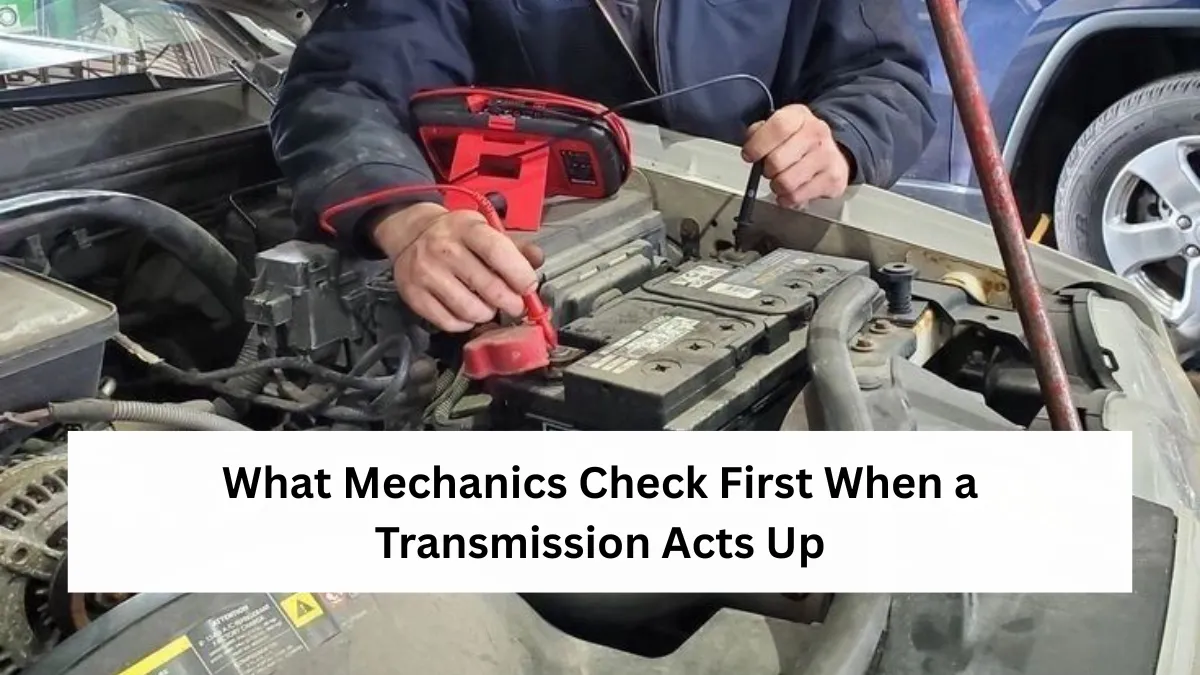
A mechanic connects a professional scan tool to the vehicle’s diagnostic port. They read stored codes, pending codes, and live data. This process does not mean replacing parts immediately. Instead, it provides clues about what the transmission control module is seeing.
What Codes Can and Cannot Tell You
A code may point to a faulty speed sensor, pressure control solenoid, or communication issue. However, codes are not conclusions. Mechanics interpret them alongside physical checks and driving symptoms to avoid misdiagnosis.
Evaluating How the Car Shifts During a Test Drive
Why a Test Drive Is Still Essential
Even with advanced tools, experienced mechanics rely on how a car feels on the road. A test drive helps confirm the driver’s complaint and reveals patterns that machines alone cannot show.
What Mechanics Pay Attention To
During a drive, technicians observe shift timing, smoothness, engagement delay, and how the transmission behaves when cold versus warm. They listen for whining, clunking, or grinding sounds and watch for warning lights.
City driving, highway cruising, and stop-and-go conditions all provide useful information. This real-world evaluation helps narrow down the cause.
What the Test Drive Helps Rule Out
A normal test drive with minor symptoms may suggest a sensor or fluid issue. Severe slipping or failure to engage often points toward internal problems, but mechanics still confirm this through further checks.
Inspecting the Transmission Filter and Pan
Why the Pan Inspection Matters
If fluid condition raises concerns, mechanics may remove the transmission pan. This allows them to inspect the filter and see what has collected at the bottom.
What Mechanics Look For Inside the Pan
Some fine metallic dust is normal, especially in high-mileage vehicles. Large metal fragments, clutch material, or debris are signs of internal wear.
The filter itself can become clogged, restricting fluid flow. A restricted filter can cause delayed shifts and overheating.
How This Step Guides Next Actions
A clean pan with dirty fluid often leads to maintenance recommendations. Significant debris signals deeper mechanical issues and helps the mechanic explain findings clearly to the vehicle owner.
Checking Transmission Mounts and Linkages
Why External Parts Can Mimic Transmission Failure
Not all shifting problems come from inside the transmission. Worn mounts or misadjusted linkages can cause harsh engagement or difficulty selecting gears.
What Mechanics Examine
Technicians inspect transmission mounts for cracks or excessive movement. They also check shift cables or linkages to ensure proper alignment and operation.
Why This Check Saves Time and Money
Fixing a mount or adjusting a linkage is far less invasive than internal repairs. This step prevents unnecessary transmission work when the real issue is external.
Verifying Software and Control Module Updates
Why Software Matters in Modern Vehicles
Many late-model cars rely on transmission control software to manage shifting behavior. Manufacturers sometimes release updates to address known issues.
How Mechanics Confirm Software Health
Using manufacturer-level tools, mechanics check for software updates or communication errors between modules. In some cases, reprogramming corrects shift timing problems or warning lights.
What This Means for the Driver
Software checks help ensure the transmission is operating as designed. This step is especially common in newer vehicles experiencing unusual but consistent behavior.
Helpful Tips and Common Mistakes to Avoid
Many drivers wait too long before having transmission symptoms checked. Small issues often grow into larger ones when ignored. Another common mistake is assuming the worst based on online stories rather than professional diagnosis.
Using the wrong transmission fluid or ignoring manufacturer service intervals can also cause problems. Every transmission design is different, and fluid type matters.
Clear communication helps as well. When visiting a shop, describing when the problem happens, how often it occurs, and whether it happens when the vehicle is cold or warm gives mechanics valuable clues.
Understanding the Process Brings Peace of Mind
When a transmission acts up, the situation can feel intimidating. However, professional mechanics follow a logical, experience-based process that starts with simple checks and builds toward deeper inspection only when necessary.
By understanding what mechanics check first, drivers gain clarity and confidence. Transmission problems are not always catastrophic, and early attention often leads to manageable solutions. Knowing how the diagnosis works helps you ask better questions, recognize reasonable explanations, and stay informed about your vehicle’s health.
FAQ’s
Is it safe to drive when my transmission is acting up?
It depends on the symptom. Mild hesitation or rough shifting may allow short trips, but slipping, burning smells, or warning lights suggest the vehicle should be inspected promptly to prevent further damage.
Does a transmission problem always mean a rebuild?
No. Many issues are caused by fluid problems, sensors, or external components. Mechanics rule out simpler causes before considering major repairs.
How long does a transmission diagnosis usually take?
Basic checks can often be completed within a few hours. More complex diagnostics may take longer, especially if test drives and detailed inspections are required.
Can cold weather affect transmission behavior?
Yes. In many parts of the United States, cold temperatures can make fluid thicker, causing delayed or harsh shifts until the vehicle warms up. Persistent issues, however, should still be checked.
✨ You May Also Like ✨