
You are driving to work, picking up groceries, or heading out on a weekend trip when a symbol suddenly lights up on your dashboard. It might look like a gear, a wrench, or a warning message about the transmission. Most drivers feel the same reaction in that moment: confusion mixed with concern.
Transmission warning lights are one of the most misunderstood dashboard alerts for everyday drivers in the United States. Many people ignore them, hoping the light will turn off on its own. Others panic and assume the worst without understanding what the warning actually means.
This guide explains transmission warning lights in plain language. You will learn why they come on, what problems they usually point to, and what practical steps you can take next. The goal is to help you make calm, informed decisions without unnecessary stress or guesswork.
What Transmission Warning Lights Are Trying to Tell You
A transmission warning light is your vehicle’s way of saying that something is not working as expected in the system that moves power from the engine to the wheels. Modern cars use sensors and onboard computers to monitor speed, temperature, fluid pressure, and gear engagement.
When one of those readings falls outside a normal range, the system turns on a warning light. Sometimes it is a dedicated transmission symbol. In other vehicles, it appears as a general warning message or a check engine light tied to transmission-related data.
The light itself does not always mean the transmission is failing. In many cases, it is an early alert designed to prevent bigger damage if you act soon.
Why Transmission Warning Lights Turn On
Transmission warning lights usually appear for one of three reasons: heat, fluid issues, or electronic communication problems.
Heat is a common trigger, especially in automatic transmissions. Long drives in hot weather, stop-and-go traffic, or towing a trailer can cause the transmission to run hotter than normal. When the temperature sensor detects this, the warning light turns on to protect internal parts.
Fluid-related problems are another frequent cause. Low transmission fluid, old fluid that has lost its ability to lubricate, or leaks under the vehicle can all trigger a warning. Transmission fluid is essential for cooling, lubrication, and smooth gear changes.
Electronic issues are also common in modern vehicles. Sensors, wiring, or control modules may send incorrect signals due to wear, corrosion, or software glitches. Even though the transmission itself may be mechanically sound, the warning light still appears because the system cannot confirm normal operation.
Common Transmission Warning Lights and What They Mean
Transmission Temperature Warning Light
This light usually looks like a gear or thermometer symbol. It means the transmission is running hotter than it should.
High temperatures often occur during long highway drives in summer, climbing steep hills, or pulling heavy loads. In city driving, repeated stopping and starting can also cause heat buildup.
Ignoring this light can lead to fluid breakdown and internal wear. The warning is meant to encourage you to stop and let the system cool down before damage occurs.
Transmission Fault or Service Transmission Message
Some vehicles display a message such as “Service Transmission” or “Transmission Fault.” This indicates that the onboard computer has detected a problem that needs attention.
The issue could be as simple as a sensor error or as serious as slipping gears. The message does not diagnose the exact problem, but it signals that the system is no longer operating within expected limits.
Check Engine Light Linked to Transmission Issues
In many cars, transmission problems do not have a separate warning symbol. Instead, they trigger the check engine light.
This can be confusing because drivers often associate that light with engine trouble only. In reality, the engine and transmission share data. Problems with shifting, torque converter performance, or speed sensors can all turn on the check engine light.
Gear Indicator or Shift Warning Light
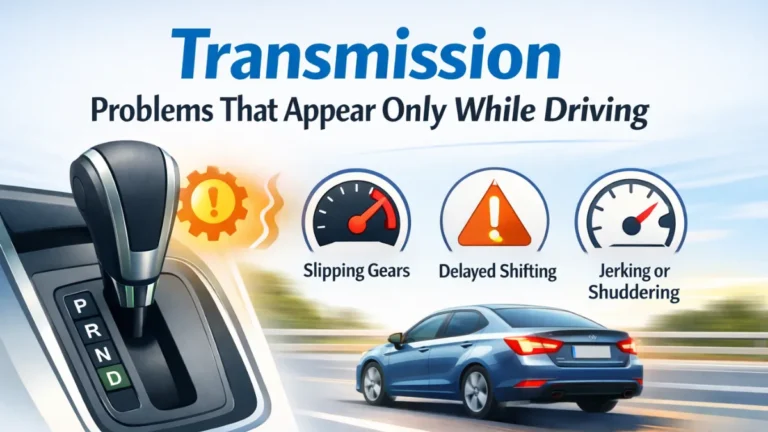
Some vehicles show a blinking gear indicator or a warning related to shifting. This often means the transmission is having trouble selecting or holding the correct gear.
Drivers may notice delayed shifts, rough gear changes, or the car staying in one gear longer than normal. The warning light appears to alert you before drivability becomes unsafe.
Step-by-Step What to Do When the Light Comes On
First, Stay Calm and Observe the Vehicle
When the transmission warning light appears, the first step is to notice how the car feels. Pay attention to shifting behavior, unusual noises, or vibrations. If the vehicle still drives smoothly, the issue may be minor or early-stage.
If you notice slipping, jerking, or loss of power, it is safer to reduce speed and plan to stop driving as soon as possible.
Next, Reduce Stress on the Transmission
If you are driving, ease off aggressive acceleration. Avoid towing, climbing steep hills, or heavy loads if possible. In hot weather, turning off unnecessary accessories can slightly reduce overall strain.
If the warning is related to temperature, pulling over and letting the vehicle idle or cool down with the engine off can help bring temperatures back to normal.
Then, Check for Obvious Signs
Once it is safe, look under the vehicle for fluid leaks. Transmission fluid is often red or dark brown and has a slightly sweet or burnt smell. Any fresh puddle under the car is a sign that the warning should not be ignored.
Also check the dashboard for additional messages or symbols that may provide more context.
After That, Plan for a Diagnostic Check
Even if the light turns off, it is important to have the system checked. Many auto parts stores in the U.S. offer basic diagnostic scans that can identify error codes. These codes provide clues about whether the issue is electronic, fluid-related, or mechanical.
A professional inspection can confirm the cause and help prevent further damage.
Why Ignoring Transmission Warning Lights Can Make Things Worse
Transmission problems rarely fix themselves. A small issue, such as low fluid or overheating, can quickly turn into internal wear if ignored.
For example, driving with overheated transmission fluid can cause seals to harden and clutch materials to wear down. Once that happens, repairs become more complex and time-consuming.
Warning lights are designed as early alerts. Responding early often means simpler solutions and less disruption to your daily routine.
Real-Life Examples from U.S. Drivers
Many drivers in suburban areas experience transmission temperature warnings during summer road trips. Long highway drives combined with high outside temperatures can push systems beyond their normal range. In many cases, stopping for a break and allowing the car to cool prevents further issues.
City drivers often report transmission fault messages after years of stop-and-go commuting. Frequent shifting at low speeds puts steady stress on internal components. Routine maintenance and fluid checks often resolve early warning signs before they escalate.
Older vehicles driven by seniors may trigger check engine lights tied to aging sensors rather than mechanical failure. Replacing a worn sensor can restore normal operation without major work.
Helpful Tips to Reduce Future Transmission Warnings
Regular maintenance plays a key role in preventing warning lights. Transmission fluid should be checked according to the manufacturer’s schedule, especially for vehicles driven in heavy traffic or extreme temperatures.
Paying attention to early changes in shifting behavior can also help. Delays, rough transitions, or unusual sounds often appear before a warning light turns on.
Avoid aggressive driving habits when possible. Smooth acceleration and steady speeds reduce heat and wear on the transmission over time.
Common Mistakes Drivers Make
One common mistake is assuming the warning light is a false alarm because the car still drives. While some alerts are minor, they are still indicators of abnormal conditions.
Another mistake is continuing long trips with the light on, especially during hot weather or heavy use. This can quickly worsen the problem.
Some drivers also confuse transmission warnings with engine issues and address the wrong system. A proper diagnostic check helps avoid unnecessary repairs.
Conclusion: Understanding the Light Makes All the Difference
Transmission warning lights are meant to inform, not frighten. They are early signals that something in the system needs attention, whether it is heat, fluid condition, or electronic communication.
By understanding what these lights mean and responding calmly, you can protect your vehicle and avoid unnecessary stress. Paying attention to how the car feels, reducing strain, and planning timely checks can make a real difference.
For everyday drivers across the United States, knowledge is the first step toward safer, more confident driving. When you understand the warning, you are better prepared to handle it wisely.
FAQ’s
Can I keep driving if the transmission warning light is on?
In some cases, you can drive short distances at reduced speed if the vehicle feels normal. However, continued driving without inspection increases the risk of further damage. It is best to have the issue checked as soon as possible.
Does a transmission warning light always mean a major problem?
No. Many warnings are triggered by sensors, fluid levels, or temperature conditions. While the light should not be ignored, it does not automatically mean the transmission has failed.
Why did the light turn off by itself?
Some warnings appear temporarily when conditions return to normal, such as after cooling down. Even if the light turns off, the underlying cause may still exist and should be checked.
Is the check engine light related to transmission issues?
Yes, in many vehicles the check engine light can indicate transmission-related problems. A diagnostic scan is needed to identify the specific cause.
✨ You May Also Like ✨